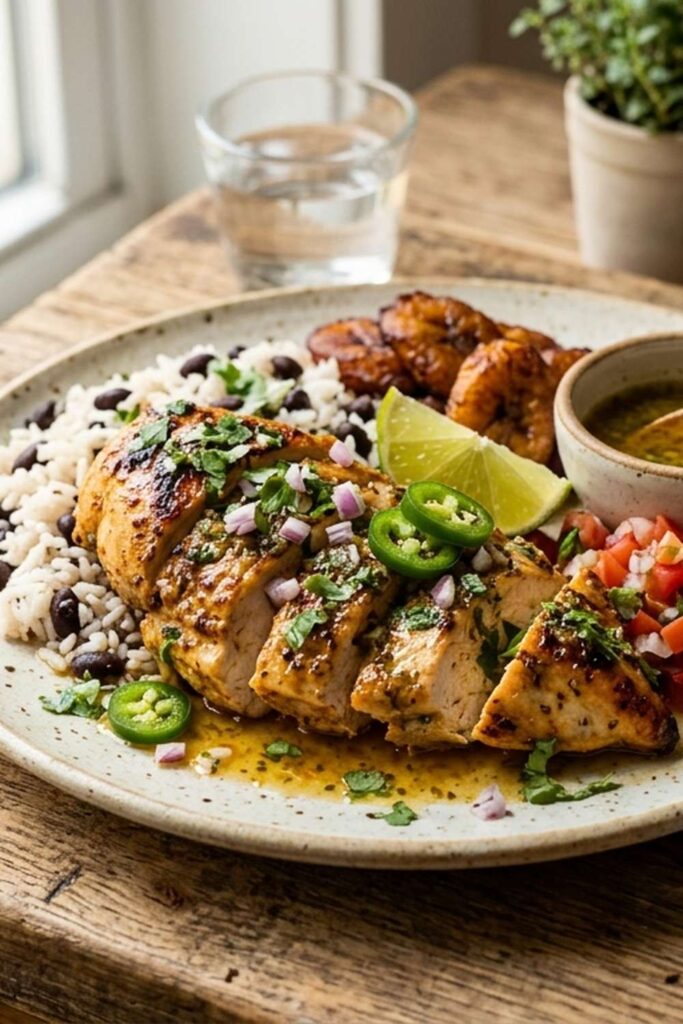
Chicken Mojo Recipe
This post contains affiliate links. As an Amazon Associate I earn from qualifying purchases.
There’s a moment in every holiday season when I remember why I fell in love with festive cooking in the first place. It happened years ago at my cousin’s Denver backyard celebration when someone pulled out a tray of gloriously golden chicken thighs glistening with this incredible marinade. The aroma of citrus, garlic, and fresh herbs stopped everyone mid-conversation. That’s when I learned that the most memorable festive meals don’t require complicated techniques—they require intentionality, accessible ingredients, and a willingness to let time do the work for you. This chicken mojo recipe is exactly that kind of magic. Whether you’re hosting an intimate gathering or feeding a crowd, this marinade transforms simple chicken into something that tastes like you spent all day in the kitchen when really, you just planned ahead. I can’t wait to share many more delicious and festive recipes with you!
Why Chicken Mojo Became My Go-To Festive Centerpiece
When I first started building my collection of recipes that work for Colorado gatherings—whether we’re celebrating at sea level or in the mountains—I realized I needed dishes that could bridge different dietary preferences, cooking skill levels, and budgets. Chicken mojo checked every single box. The magic happens in the marinade: a blend of citrus juice, fresh herbs, and garlic that doesn’t require expensive specialty ingredients or equipment.
What I love most about this dish is how it transforms through time. The longer the chicken sits in the marinade, the more the flavors deepen and penetrate the meat. This is what I call “make-ahead magic”—the kind of preparation that turns stress into serenity. You can prepare this the day before your gathering, or even two days before, and your chicken becomes progressively more flavorful without any additional effort on your part.
I’ve served this at everything from casual weeknight dinners to holiday celebrations with thirty guests, and it consistently receives the same reaction: people are surprised by how complex and festive it tastes, then delighted when they realize how simple it actually is to prepare. That’s the real heart of what I believe about gathering food—it should be achievable, joyful, and absolutely delicious.
What Makes This Marinade Different From Other Citrus Chicken Recipes
As a registered dietitian who’s spent a decade helping families navigate holiday meal planning, I’ve learned that the best festive recipes work with your lifestyle, not against it. This particular marinade does something special: it uses a combination of fresh orange and lime juice along with fresh mint that creates depth without requiring wine, vinegar, or anything that might not be in your pantry already.
The balance of citrus is crucial here. The orange juice brings natural sweetness and brightness, while the lime juice adds the sharp acidity that tenderizes the chicken and prevents it from becoming dry during cooking. Most home cooks worry about marinade time, but with this particular combination of ingredients, even four hours yields noticeable improvement, though I genuinely prefer to let it work its magic overnight or longer.
One thing I always emphasize in my nutrition consultations: this marinade is inherently healthy because it relies on whole food flavoring agents rather than salt-heavy commercial mixes. The olive oil carries the fat-soluble flavor compounds while providing heart-healthy monounsaturated fats.
The Ingredients—What You’ll Actually Use
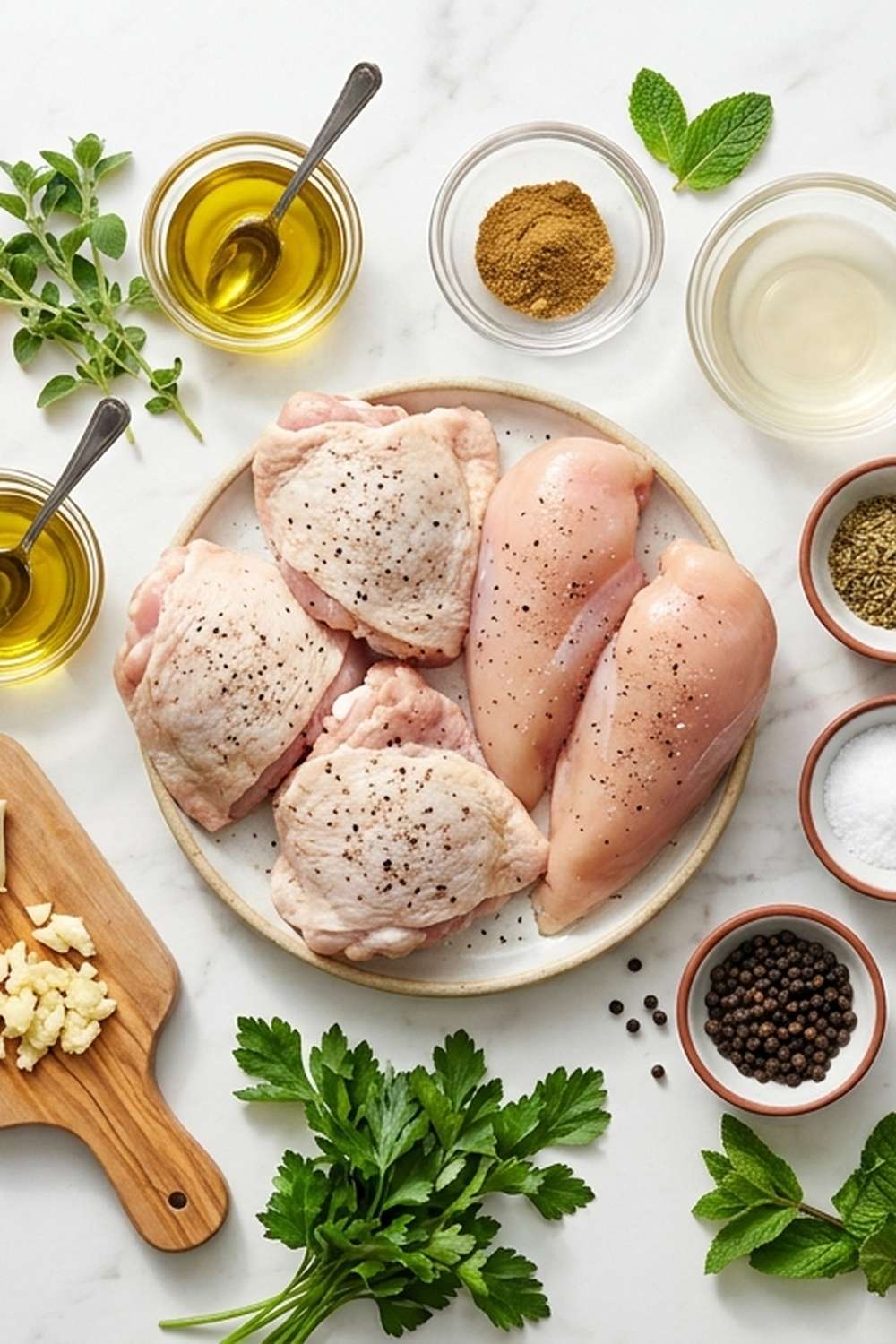
I’ve structured this ingredient list to show you exactly what you need, with flexibility built in because that’s how real kitchens work. One of my favorite parts of being a festive gathering expert is helping people understand that ingredient lists aren’t commands—they’re suggestions based on what works beautifully together.
- 2 pounds bone-in, skin-on chicken thighs (approximately 8 individual pieces, though drumsticks work wonderfully too)
- 2 tablespoons fresh cilantro, roughly chopped (for finishing garnish)
- ½ cup fresh cilantro leaves, lightly packed (or flat-leaf parsley if cilantro isn’t your preference)
- ½ teaspoon freshly ground black pepper (grind it yourself if possible)
- 1 teaspoon ground cumin (this spice is a game-changer for festive cooking)
- ⅓ cup extra-virgin olive oil (the quality here matters slightly more than usual—you taste it in the final dish)
- ¾ teaspoon dried oregano (Mexican oregano preferred, but regular oregano works perfectly)
- 1 medium orange, cut into wedges (for serving and garnish)
- 1 teaspoon sea salt (adjust based on your cooking method)
- 1½ tablespoon fresh mint leaves, finely chopped (this ingredient elevates the entire marinade)
- 4 medium cloves garlic, minced (fresh is essential here)
- ¼ cup freshly squeezed lime juice (about 2-3 limes, depending on their size)
- ⅓ cup freshly squeezed orange juice (not from concentrate—it truly matters)
- 1 teaspoon orange zest (use a microplane for the finest texture)
The Transformation: How to Make Chicken Mojo From Start to Finish
This is where the beautiful simplicity of the recipe becomes apparent. There are only a handful of steps, but understanding why we’re doing each one will help you make adjustments based on your ingredients and preferences.
Step 1: Prepare Your Marinade Base
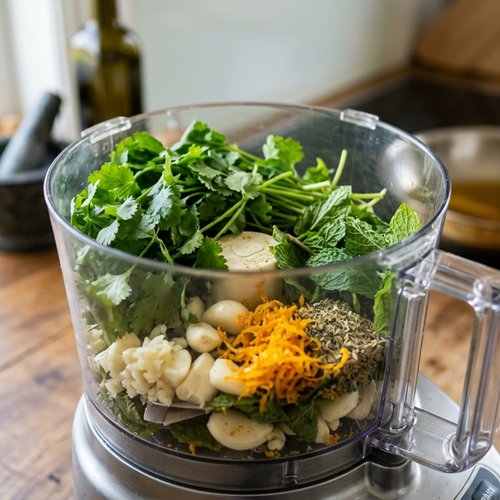
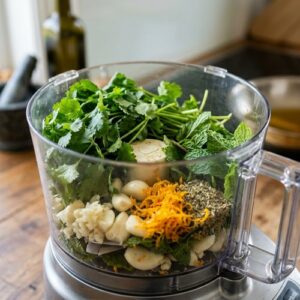
Add your fresh cilantro, minced garlic, fresh mint, orange zest, and oregano to the bowl of a food processor. Pulse until the fresh herbs break down into small, visible pieces—you’re aiming for roughly the texture of coarse sand. This step is crucial because you want the herb particles small enough to coat the chicken evenly, but not so pulverized that they become paste and lose their fresh character.
I recommend pulsing rather than continuously blending because continuous blending oxidizes the herbs and can turn them dark and bitter. Think of it as gentle encouragement rather than aggressive chopping. This takes about 8-10 pulses in most food processors.
Step 2: Create the Liquid Component
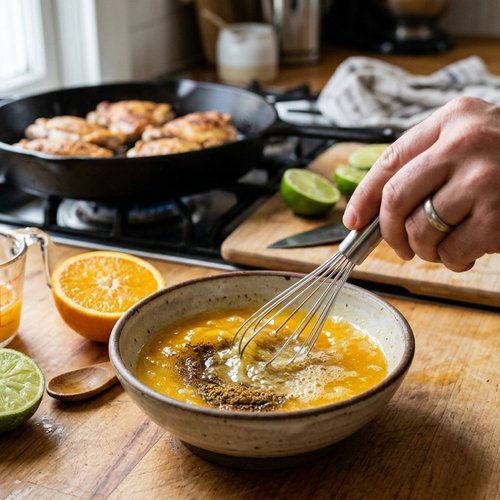
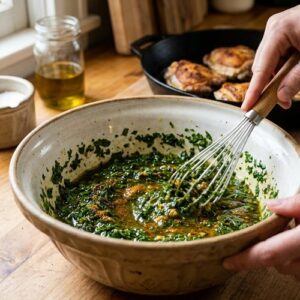
Pour your freshly squeezed orange juice, lime juice, and cumin into a small bowl and whisk together. This whisking step does two important things: it helps dissolve the cumin evenly throughout the liquid so you don’t get bitter pockets where it’s concentrated, and it begins combining the flavors rather than keeping them separate.
Let this mixture sit for just one minute—this sounds small, but it allows the cumin to bloom and release its essential oils into the juice. This blooming step is what transforms ordinary citrus into something with real depth and warmth.
Step 3: Combine Into Final Marinade
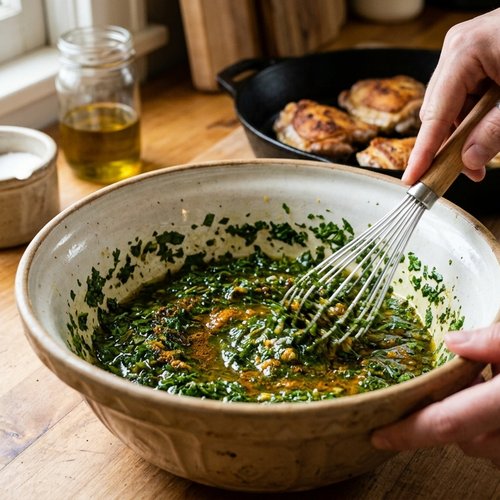
Return the herb mixture from your food processor to a large mixing bowl. Add the oil and cumin-citrus mixture together and stir thoroughly. This is the moment where your marinade transforms from separate components into something cohesive. The oil won’t completely emulsify with the juice—it will separate slightly—and that’s exactly what you want. This separation actually helps the flavors work on the chicken in different ways.
Add your salt and pepper, then taste the marinade. A proper tasting here is essential—you should taste bright citrus first, then warm cumin, then the fresh herb notes. If it tastes too sharp, add a pinch more salt, which rounds out citrus acidity. If it tastes flat, add another squeeze of lime juice.
Step 4: Prepare Your Chicken
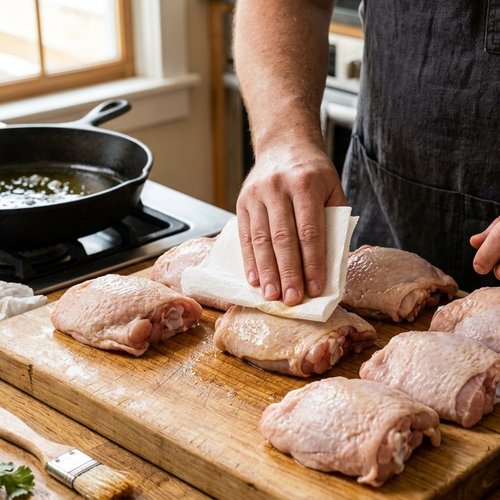
Pat your chicken thighs dry with paper towels. This step matters more than people realize—excess moisture on the surface prevents the marinade from making good contact with the meat. You don’t need to be obsessive about it, just remove the obvious moisture. Place the dried chicken pieces in a large bowl or a gallon-sized zip-top bag.
If using a zip-top bag, I prefer this method for storage in the refrigerator because it takes up minimal space and you can rotate the chicken easily. If using a bowl, choose one large enough that you can cover it loosely with plastic wrap.
Step 5: Marinate With Intention
Pour your marinade over the chicken and gently toss to coat every piece. Make sure the herb particles are distributed around all the chicken, not just settled on the bottom. If using a zip-top bag, seal it carefully and gently massage the bag to coat everything. If using a bowl, cover with plastic wrap.
Now here’s where patience becomes your greatest ingredient: refrigerate for at least 12 hours, though I genuinely prefer 24 to 36 hours. During this time, the acid in the citrus juice slowly tenderizes the chicken while the herbs and spices penetrate the meat. This isn’t passive waiting—this is active flavor development happening at a molecular level.
If you’re using a zip-top bag, flip it over halfway through the marinating time. If you’re using a bowl, gently stir once halfway through. This ensures even exposure to the marinade.
Step 6: Bring to Temperature Before Cooking
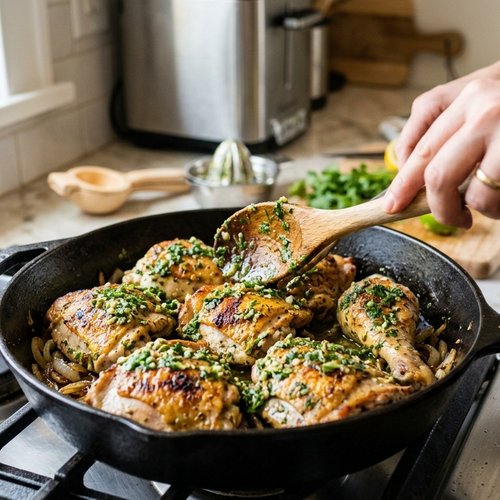
About 30 minutes before you plan to cook, remove your chicken from the refrigerator. This step is important because it allows the chicken to reach closer to room temperature, which ensures more even cooking. Cold chicken straight from the refrigerator will cook unevenly—the outside will brown before the inside reaches safe temperature.
While the chicken is coming to temperature, prepare your cooking surface. For Colorado gatherings, I often use a grill, but you can also use a cast-iron skillet on the stovetop or a sheet pan in the oven at 425°F.
Step 7: Cook Until Golden and Cooked Through
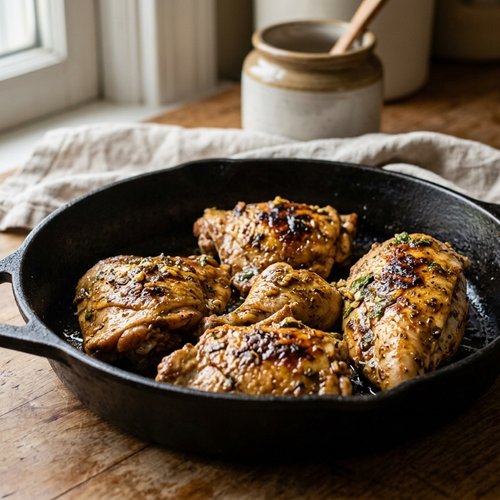
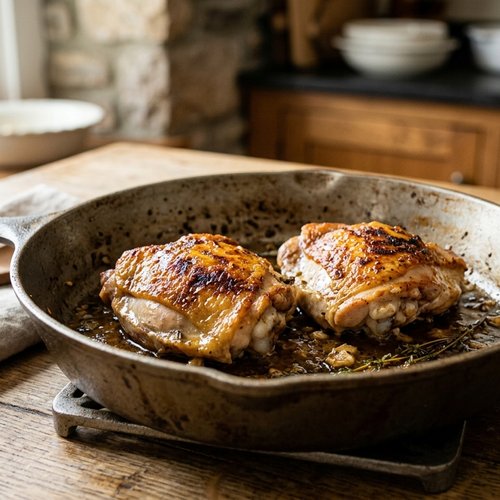
If grilling: Heat your grill to medium-high heat (about 375-400°F). Remove the chicken from the marinade, allowing excess marinade to drip back into the bowl—save this for basting. Place chicken skin-side down on the grill and cook for 6-7 minutes without moving it. Resist the urge to flip constantly; this is how you get that beautiful golden skin.
Flip the chicken and cook for another 6-8 minutes, basting occasionally with the reserved marinade. The chicken is done when the thickest part (near the thigh bone) reaches 165°F on a meat thermometer.
If using the oven method: Place marinated chicken skin-side up on a parchment-lined sheet pan. Roast at 425°F for 35-40 minutes, basting with reserved marinade halfway through cooking.
Step 8: Rest Before Serving
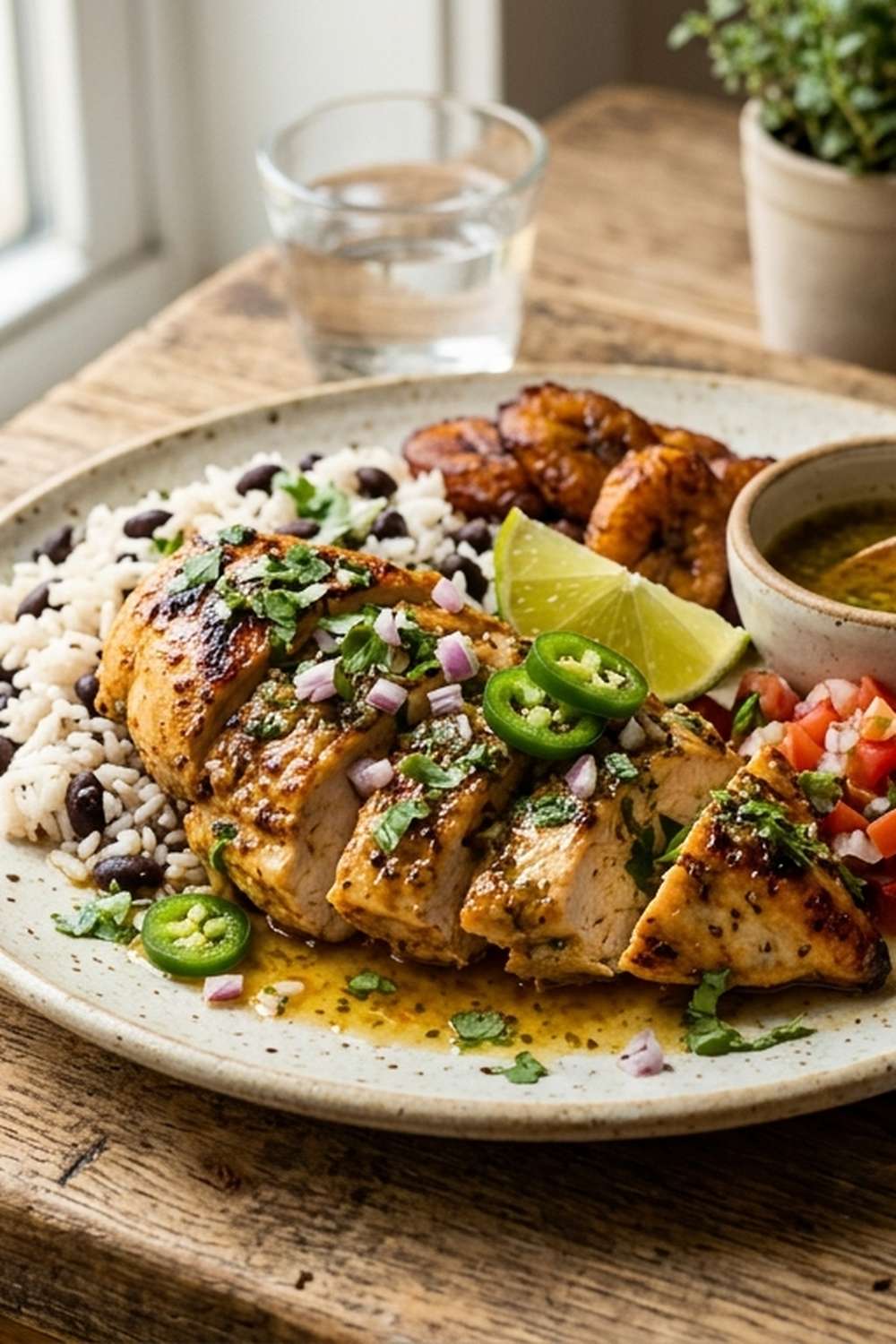
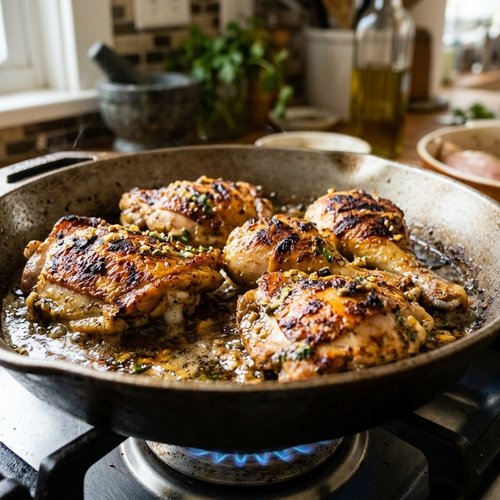
Remove your chicken from heat and let it rest for 5 minutes before serving. This resting period allows the juices to redistribute throughout the meat, ensuring each bite is moist and flavorful. Serve with fresh orange wedges and a garnish of chopped cilantro.
Make-Ahead Guide: Planning Your Festive Gathering Timeline
One of the best parts about this recipe is that it actually improves with advance planning. Here’s how I structure preparation for various gathering sizes:
- 48 hours before: Purchase your chicken and citrus. Store chicken in the coldest part of your refrigerator. This gives you flexibility and prevents last-minute trips.
- 24-36 hours before: Prepare the marinade and combine with chicken. This is your ideal marinating window. If you’re hosting a large gathering, this timing means your protein is handled two days out, significantly reducing day-of stress.
- 2 hours before guests arrive: Remove chicken from refrigerator and let come to temperature. Prepare any serving platters or garnishes.
- Cooking time: Plan for 15-20 minutes if grilling, or 40 minutes if roasting. This allows you to focus on sides and greeting guests.
This timeline is what I call “stress-free gathering preparation.” Your protein is essentially done two days before anyone arrives, which means you can focus on fresh sides, beverages, and creating the actual festive atmosphere.
How to Adapt Based on What You Have
- If you don’t have fresh mint: Skip it entirely or use fresh basil instead. Basil creates a completely different but equally delicious flavor profile.
- If you only have bottled citrus juice: Use it, but reduce the salt slightly since bottled juice often has added salt. Fresh is genuinely better here, but bottled works.
- If you prefer dark meat chicken: This recipe is actually ideal for thighs and drumsticks since they stay moist during marinating and cooking. If using chicken breasts, reduce marinating time to 8-12 hours to prevent them from becoming mushy.
- If you can’t find fresh cilantro: Use flat-leaf parsley or the herbs from my Avocado Tomatillo Salsa Recipe, which features similar fresh herb combinations.
- If you need to make this dairy-free or vegan: Use extra-firm tofu pressed and cut into thick slabs, doubling the marinade and marinating for 4-6 hours only (tofu absorbs flavors faster than chicken).
- If your marinade seems too thin: It should be thin—that’s correct. The acidity and herbs work better in liquid form than in a thick paste.
Expert’s Nutritional Insight: Why This Marinade Is Actually Beneficial
As a registered dietitian, I’m always looking for ways that festive cooking can support health rather than compromise it. This particular marinade is genuinely nutritious, not despite being delicious, but because of how it’s constructed.
The citrus juice provides vitamin C, which helps your body absorb the iron in the chicken and supports immune function—particularly important during gathering season. The fresh herbs contribute phytonutrients and antioxidants without any added sodium. The olive oil provides monounsaturated fats, which research shows support heart health and help absorb fat-soluble vitamins.
Most importantly, the marinating process itself makes the chicken more bioavailable. The acid in the citrus juice breaks down some of the connective tissue in the chicken, making the protein easier for your body to digest and utilize. This is one of those beautiful intersections where food science and traditional cooking wisdom meet perfectly.
Zero Waste: Using Every Last Bit
In my household, we use every part of what we cook, and this recipe offers wonderful opportunities for that philosophy.
- Citrus zest and juice: Before squeezing your limes and oranges, zest them using a microplane. Any leftover zest keeps in an airtight container for a week and is wonderful on roasted vegetables or yogurt.
- Cilantro stems: Don’t discard these. Chop them finely and add to your marinade along with the leaves—the stems actually have flavor and help reduce waste.
- Reserved marinade: After cooking, the remaining marinade contains rendered chicken fat and concentrated flavors. Cool it and use it to dress fresh greens or vegetables.
- Chicken bones and skin: Save these for homemade stock. This is what I call “gathering abundance”—one meal becomes the foundation for another.
Can I Store Chicken Mojo?
Yes, and actually, this is one of the beauties of the recipe. The chicken stores well because the marinade continues to work as a preservative.
In the refrigerator: Cooked chicken mojo keeps for 3-4 days in an airtight container. The flavors actually improve slightly on day two as the acid continues its work.
In the freezer: You can freeze cooked chicken mojo for up to 3 months. I recommend freezing it with some of the rendered cooking liquid to prevent drying. Thaw in the refrigerator overnight and reheat gently in a 325°F oven until warmed through.
The marinade itself: Raw chicken in marinade keeps for 3-4 days before the acid begins breaking down the meat too much. This is why I recommend marinating no longer than 36 hours, though 24 hours is genuinely my preference.
Make-ahead for gatherings: You can marinate chicken up to 36 hours before your event. You can also cook it the morning of your gathering and serve it at room temperature or gently reheated, which is my strategy for large groups.
Nutrition Information
Per serving (one chicken thigh with marinade): Approximately 380 calories, 28g protein, 29g fat (mostly unsaturated), 3g carbohydrates, and negligible added sugars. According to USDA nutritional database standards, this is an excellent source of B vitamins, particularly niacin and B6, which support energy metabolism—important when you’re hosting and entertaining.
The marinating process actually improves the nutritional profile by making the protein more digestible and bioavailable. The citrus provides vitamin C without any added sugars, and the olive oil provides anti-inflammatory compounds.
One thing I want to emphasize: this is festive food that genuinely aligns with a healthy approach to eating. The protein is substantial enough to keep you satisfied, the fat is heart-healthy, and there are no processed ingredients. This is exactly the kind of gathering food I always recommend.
What to Serve With Chicken Mojo
The beauty of this chicken is that it’s vibrant and complex enough to be the star of your gathering, but it plays beautifully with simple, fresh sides that let its flavors shine.
I always recommend sides that provide contrast through freshness and brightness. The chicken has warmth, richness, and depth—so your sides should have different qualities that balance the plate.
- Simple greens with lime vinaigrette: The acidity echoes the chicken’s citrus notes while the freshness balances the richness of the skin.
- Roasted root vegetables: Something like the Barbecue Potatoes Recipe provides earthiness that grounds the bright flavors.
- Fresh corn and asparagus: Check out my Asparagus Corn Recipe for a vegetable side that celebrates Colorado’s seasonal produce beautifully.
- Cilantro lime rice: A simple grain that soaks up the rendered chicken juices and echoes the marinade flavors.
- Black beans with cumin: Echoes the cumin in the marinade while providing protein and fiber for a more substantial gathering meal.
- Fresh tomato and avocado salsa: The acidity and freshness provide beautiful balance. This would pair wonderfully with the Avocado Tomatillo Salsa Recipe for a complete Mexican-inspired gathering menu.
Common Mistakes to Avoid (So Your Chicken Is Perfect)
After helping hundreds of people prepare this dish, I’ve noticed certain patterns that affect the outcome. Let me share what I’ve learned:
- Mistake 1—Not patting the chicken dry before marinating: Excess moisture on the chicken surface prevents the marinade from making good contact with the meat. It takes 30 seconds and makes a noticeable difference in flavor absorption.
- Mistake 2—Marinating for too short a time: The minimum 12 hours is genuinely important. Less than that, and you don’t get the full tenderizing and flavor benefit. I see people try to shortcut this and end up disappointed.
- Mistake 3—Using pre-squeezed or bottled juice: I understand convenience, but fresh citrus is genuinely one of the few places where this recipe requires a small effort. The difference in flavor is substantial.
- Mistake 4—Not bringing the chicken to room temperature before cooking: Cold chicken cooks unevenly. You’ll get skin that’s overcooked and meat that’s undercooked. This 30-minute step prevents that.
Seasonal Variations and Adaptations
One of the reasons I love this recipe is its flexibility across seasons. Here’s how I adapt it throughout the year:
- Spring variation: Add fresh tarragon instead of mint, reduce the cumin slightly, and serve with fresh asparagus and spring peas.
- Summer variation: Add a pinch of red pepper flakes for heat, serve with grilled corn and tomato salad, and let guests finish with fresh lime wedges.
- Fall variation: Increase the cumin slightly, add a pinch of cinnamon to the marinade, and serve with roasted root vegetables and pomegranate seeds.
- Winter variation: Add fresh rosemary to the marinade, use blood oranges when available, and serve with warm grains and roasted Brussels sprouts.

Chicken Mojo Recipe
Ingredients
Method
- Add your fresh cilantro, minced garlic, fresh mint, orange zest, and oregano to the bowl of a food processor. Pulse until the fresh herbs break down into small, visible pieces—you're aiming for roughly the texture of coarse sand. This step is crucial because you want the herb particles small enough to coat the chicken evenly, but not so pulverized that they become paste and lose their fresh character. I recommend pulsing rather than continuously blending because continuous blending oxidizes the herbs and can turn them dark and bitter. Think of it as gentle encouragement rather than aggressive chopping. This takes about 8-10 pulses in most food processors.
- Pour your freshly squeezed orange juice, lime juice, and cumin into a small bowl and whisk together. This whisking step does two important things: it helps dissolve the cumin evenly throughout the liquid so you don't get bitter pockets where it's concentrated, and it begins combining the flavors rather than keeping them separate. Let this mixture sit for just one minute—this sounds small, but it allows the cumin to bloom and release its essential oils into the juice. This blooming step is what transforms ordinary citrus into something with real depth and warmth.

- Return the herb mixture from your food processor to a large mixing bowl. Add the oil and cumin-citrus mixture together and stir thoroughly. This is the moment where your marinade transforms from separate components into something cohesive. The oil won't completely emulsify with the juice—it will separate slightly—and that's exactly what you want. This separation actually helps the flavors work on the chicken in different ways. Add your salt and pepper, then taste the marinade. A proper tasting here is essential—you should taste bright citrus first, then warm cumin, then the fresh herb notes. If it tastes too sharp, add a pinch more salt, which rounds out citrus acidity. If it tastes flat, add another squeeze of lime juice.
- Pat your chicken thighs dry with paper towels. This step matters more than people realize—excess moisture on the surface prevents the marinade from making good contact with the meat. You don't need to be obsessive about it, just remove the obvious moisture. Place the dried chicken pieces in a large bowl or a gallon-sized zip-top bag. If using a zip-top bag, I prefer this method for storage in the refrigerator because it takes up minimal space and you can rotate the chicken easily. If using a bowl, choose one large enough that you can cover it loosely with plastic wrap.

- Pour your marinade over the chicken and gently toss to coat every piece. Make sure the herb particles are distributed around all the chicken, not just settled on the bottom. If using a zip-top bag, seal it carefully and gently massage the bag to coat everything. If using a bowl, cover with plastic wrap. Now here's where patience becomes your greatest ingredient: refrigerate for at least 12 hours, though I genuinely prefer 24 to 36 hours. During this time, the acid in the citrus juice slowly tenderizes the chicken while the herbs and spices penetrate the meat. This isn't passive waiting—this is active flavor development happening at a molecular level. If you're using a zip-top bag, flip it over halfway through the marinating time. If you're using a bowl, gently stir once halfway through. This ensures even exposure to the marinade.

- About 30 minutes before you plan to cook, remove your chicken from the refrigerator. This step is important because it allows the chicken to reach closer to room temperature, which ensures more even cooking. Cold chicken straight from the refrigerator will cook unevenly—the outside will brown before the inside reaches safe temperature. While the chicken is coming to temperature, prepare your cooking surface. For Colorado gatherings, I often use a grill, but you can also use a cast-iron skillet on the stovetop or a sheet pan in the oven at 425°F.

- If grilling: Heat your grill to medium-high heat (about 375-400°F). Remove the chicken from the marinade, allowing excess marinade to drip back into the bowl—save this for basting. Place chicken skin-side down on the grill and cook for 6-7 minutes without moving it. Resist the urge to flip constantly; this is how you get that beautiful golden skin. Flip the chicken and cook for another 6-8 minutes, basting occasionally with the reserved marinade. The chicken is done when the thickest part (near the thigh bone) reaches 165°F on a meat thermometer. If using the oven method: Place marinated chicken skin-side up on a parchment-lined sheet pan. Roast at 425°F for 35-40 minutes, basting with reserved marinade halfway through cooking.

- Remove your chicken from heat and let it rest for 5 minutes before serving. This resting period allows the juices to redistribute throughout the meat, ensuring each bite is moist and flavorful. Serve with fresh orange wedges and a garnish of chopped cilantro.

Notes
FAQs About Chicken Mojo
Can I use boneless, skinless chicken breasts instead of thighs?
Technically yes, but I genuinely don’t recommend it. Boneless, skinless breasts can become dry and stringy with extended marinating because the acid will overwork the delicate protein. If you must use breasts, marinate for only 8-12 hours maximum. That said, thighs are really the ideal cut for this recipe—they stay moist, the skin gets beautifully crispy, and they’re usually more budget-friendly for feeding groups.
What if I don’t have a food processor?
You can mince everything by hand. It takes about five minutes longer, but your marinade will be equally delicious. The key is getting the herbs and garlic into small pieces so they distribute evenly. You could also use a blender, though I find food processors give better texture control.
Can I make the marinade without the mint?
Absolutely. The mint adds a cooling, fresh note that I love, but it’s not essential to the recipe’s success. Without it, you’ll have a more traditional Latin-inspired marinade. Some people who don’t enjoy mint prefer the recipe this way.
Is this marinade safe if I’m feeding people with citrus allergies?
This is fundamentally a citrus-based marinade, so it’s not suitable for people with citrus allergies. If you need to accommodate this, you’d need to use a completely different marinade. The acid and brightness of the citrus are core to how this recipe works.
Can I use this marinade for vegetables or seafood?
Absolutely! I use this exact marinade for shrimp (marinate 2-4 hours only), firm white fish (marinate 2-4 hours), bell peppers, zucchini, and eggplant. For vegetables, I marinate for 1-2 hours before grilling. The timing is shorter for everything except chicken because the acid works faster on these items.
More Festive Recipes You’ll Love
- Arroz Con Pollo Best Recipe – another beautiful Latin-inspired chicken dish perfect for gatherings
- Asparagus Corn Recipe – a fresh vegetable side that complements this chicken perfectly
- Barbecue Potatoes Recipe – an excellent starch for rounding out your gathering menu
- this simple cake – a festive dessert to follow this main course
The Joy of Intentional Gathering Cooking
Every time I make chicken mojo, I’m reminded of why I became so passionate about festive cooking in the first place. It’s not about impressing people with complicated techniques or expensive ingredients. It’s about understanding that time, good ingredients, and thoughtful preparation create magic.
This chicken represents everything I believe about gathering food: it’s accessible, beautiful, budget-friendly, and genuinely delicious. It accommodates advance planning, which means you can be present with your guests rather than stressed in the kitchen. It works for intimate dinners and large celebrations equally well.
When you serve this chicken, you’re not just feeding people—you’re creating a moment. You’re saying “I thought about this gathering in advance. I invested time and care into making something special.” And that intention, more than any technique or ingredient, is what makes food memorable.
I can’t wait to share many more delicious and festive recipes with you!