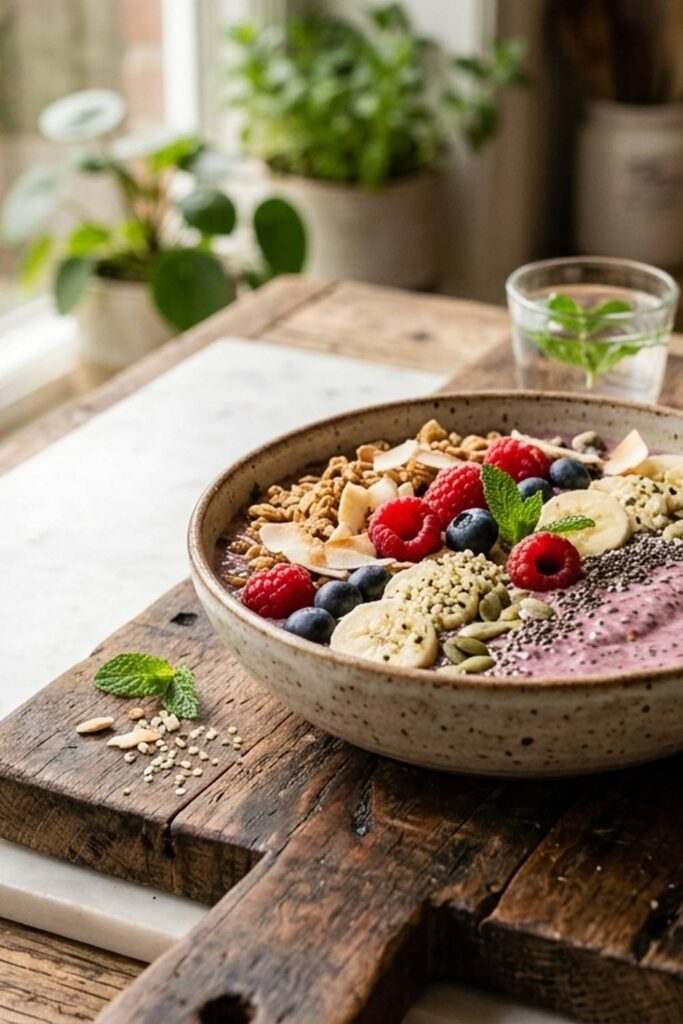
Chia Smoothie Recipe
This post contains affiliate links. As an Amazon Associate I earn from qualifying purchases.
Whether you’re keto, vegan, or gluten-free, you don’t have to miss out on a delicious, nutrient-packed breakfast that actually tastes like a treat. I’ve spent the last decade helping families navigate dietary restrictions during holiday gatherings and everyday meals alike, and I’ve learned that the best recipes work with your body’s needs, not against them. This chia smoothie recipe is my go-to solution when someone asks me how to blend nutrition with accessibility—because let’s face it, not everyone can eat the same thing, and that’s perfectly okay. I can’t wait to share this adaptable recipe with you and show you how one base formula becomes four completely different smoothies!
The Ultimate Chia Smoothie for Every Diet (Keto, Vegan, Gluten-Free)
I’ll never forget the year my sister went vegan right before the holidays. She arrived at our family gathering worried she’d be picking at salad while everyone else enjoyed dessert. That’s when I realized my decade of nutrition expertise needed to translate into something practical: recipes that don’t make anyone feel left out. I started experimenting with smoothie bases that could shift and transform depending on who was drinking them. That’s when this chia smoothie became my secret weapon. The beauty of chia seeds is their nutritional density—they’re loaded with omega-3 fatty acids, fiber, and complete protein—making them the perfect anchor for any dietary variation. My family now jokes that our kitchen has become “Smoothie Central,” but honestly, I love that everyone can sit down to breakfast together, even when our plates (or glasses) look completely different.
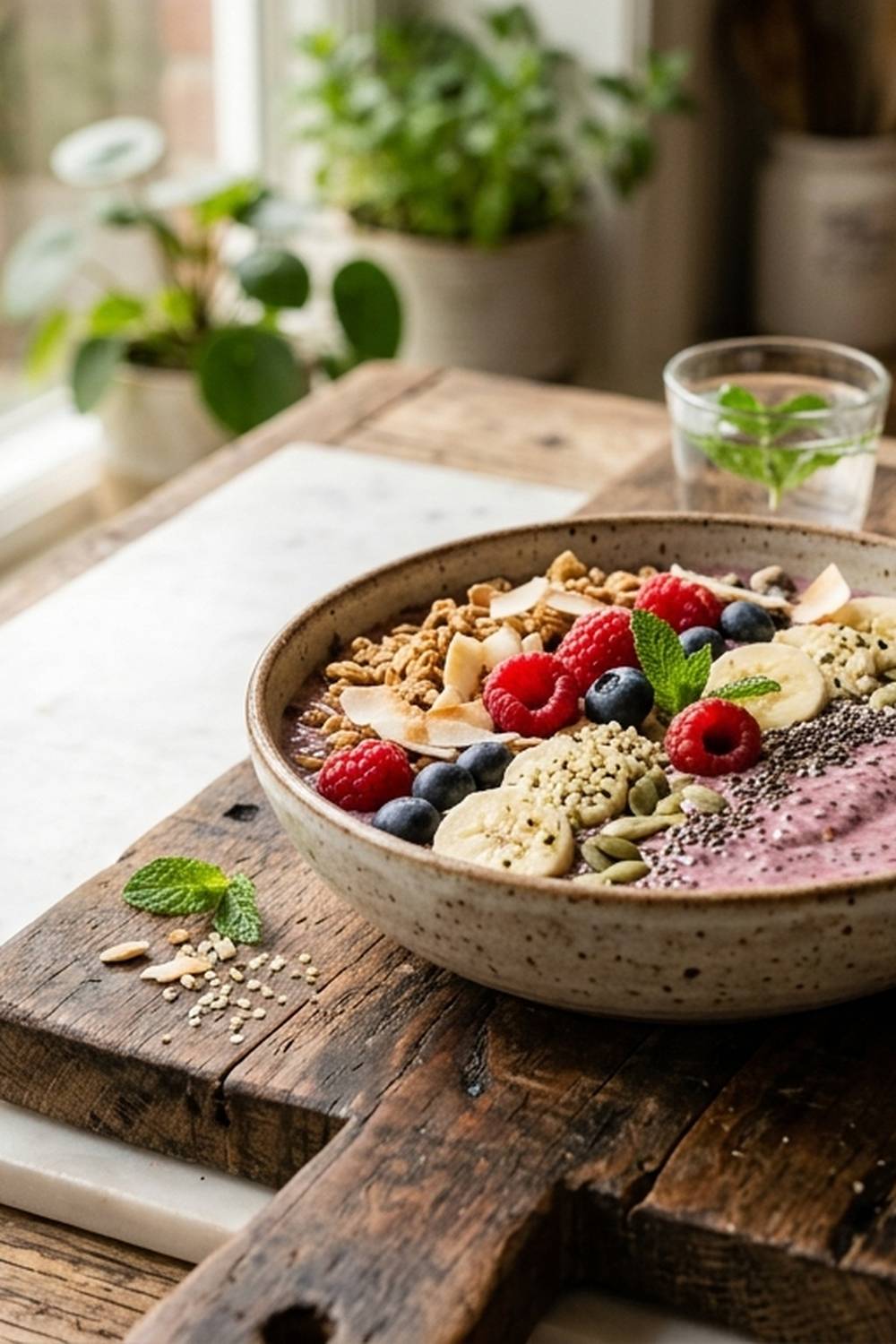
Which Version Is Right for You?
I’ve broken down the four most common dietary approaches I see in my practice, and I want you to know that there’s zero judgment here. Your body, your rules. Pick the version that aligns with your goals and lifestyle, and let’s build something delicious together.
- Keto Version – Swap the orange juice and banana for high-fat, low-carb ingredients like avocado and coconut milk. You’ll get creamy richness without spiking blood sugar. Expect bold, tropical notes and a texture that’s more like a thick pudding.
- Vegan Version – Replace dairy milk with oat, almond, or cashew alternatives. Use a plant-based protein powder if you want extra amino acids. The result is light, fruity, and perfectly satisfying without any animal products.
- Gluten-Free Version – Good news: this smoothie is naturally gluten-free! Just verify your protein powder and any toppings are certified gluten-free if you have celiac disease. The texture and flavor remain completely unchanged.
- Dairy-Free Version – Whether it’s for lactose intolerance or preference, coconut, almond, or soy milk works beautifully. The smoothie stays creamy and rich while being completely dairy-free.
The Base Ingredients (Works for All Versions)
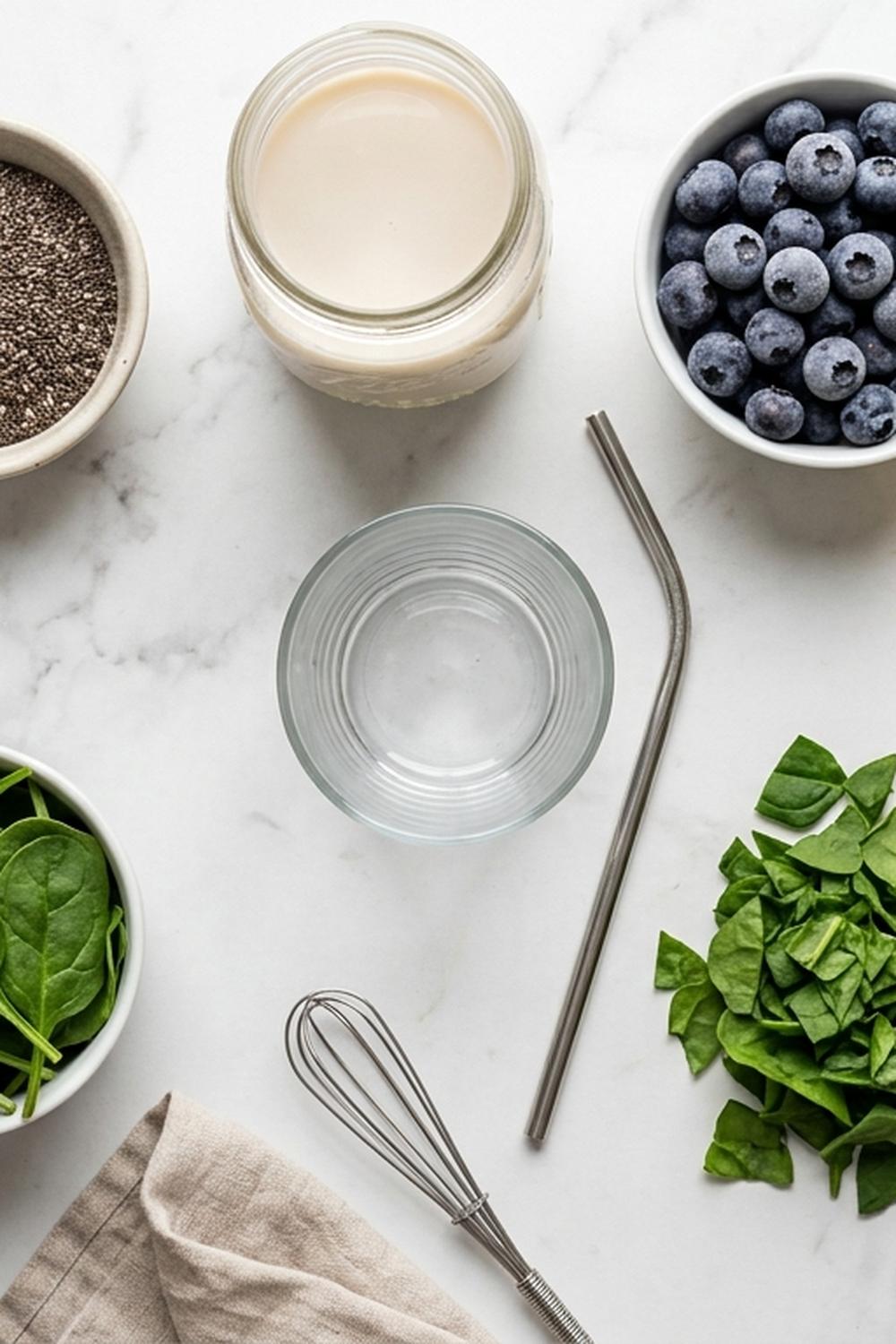
These core ingredients form the foundation of every variation. The magic happens when you keep these elements consistent and swap out the liquid and fat components based on your dietary needs. This recipe makes 2 generous servings—perfect for a partner breakfast or a smoothie-plus-snack situation for one person.
- 2 cups frozen strawberries (unsweetened, no added sugar—the natural fruit sweetness is plenty)
- ½ teaspoon vanilla extract (pure, not imitation—it makes a real difference in flavor)
- 1 tablespoon raw honey or maple syrup (optional, only if you prefer extra sweetness)
- 1 cup milk of your choice (dairy, oat, almond, coconut—we’ll customize this)
- 2 tablespoons chia seeds (these tiny powerhouses thicken and add complete protein)
- ½ cup fresh orange juice (or substitute based on your dietary version below)
- 1 large ripe banana (the softer, the better for natural sweetness and blending ease)
Dietary Substitution Chart
I use this chart in my nutrition practice all the time because it removes the guesswork. Instead of wondering “will this work for keto?” you can see exactly what swaps to make. Each substitution maintains the nutritional integrity of the original recipe while honoring your dietary needs.
- Strawberries -> Keto: raspberries or blackberries (lower net carbs per cup) | Vegan: strawberries are plant-based; keep them | Gluten-Free: strawberries are naturally gluten-free | Dairy-Free: strawberries are naturally dairy-free
- Regular Milk -> Keto: full-fat coconut milk or heavy cream (5-7g fat per serving) | Vegan: oat, soy, or cashew milk (fortified with calcium) | Gluten-Free: any milk; verify oat milk is certified gluten-free | Dairy-Free: coconut, almond, oat, or soy milk
- Honey -> Keto: monk fruit sweetener or erythritol (zero carb impact) | Vegan: maple syrup or agave (plant-based) | Gluten-Free: honey is naturally gluten-free | Dairy-Free: honey is naturally dairy-free (unless you avoid all bee products)
- Banana -> Keto: ½ avocado (creaminess without carbs) | Vegan: banana is plant-based; keep it | Gluten-Free: banana is naturally gluten-free | Dairy-Free: banana is naturally dairy-free
- Orange Juice -> Keto: unsweetened almond milk or coconut water (skip the juice entirely; use ¾ cup total liquid) | Vegan: fresh-squeezed orange juice works perfectly | Gluten-Free: orange juice is naturally gluten-free; verify the brand | Dairy-Free: orange juice is naturally dairy-free
How to Make Your Chia Smoothie Your Way
I’ve written these instructions to work as a universal base, and I’ll give you specific modifications at each step so you know exactly what to do for your dietary version. The beauty of smoothies is their forgiving nature—you’re blending everything together, so precision matters less than intuition. Trust your senses.
Step 1: Measure and Organize Your Ingredients
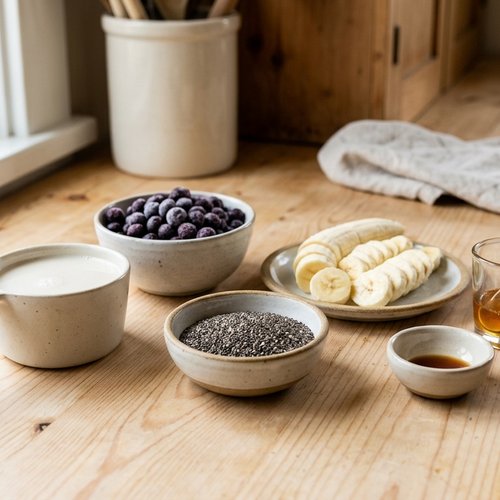
Before you even touch the blender, set out everything you need. I learned this trick from working with families during busy holiday mornings—mise en place (everything in its place) saves time and prevents mistakes. For the keto version, have your avocado halved and ready to go. For the vegan version, make sure your plant-based milk is chilled. For dairy-free, keep your coconut or almond milk at room temperature for better blending. Measure your frozen strawberries into a bowl so you can see exactly how much you’re using. Peel and slice your banana if you’re using the standard or vegan version.
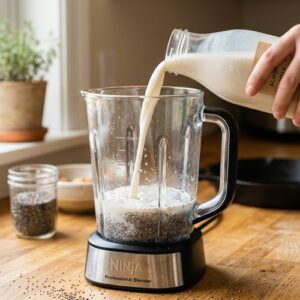
Step 2: Add Liquids First (This Matters!)
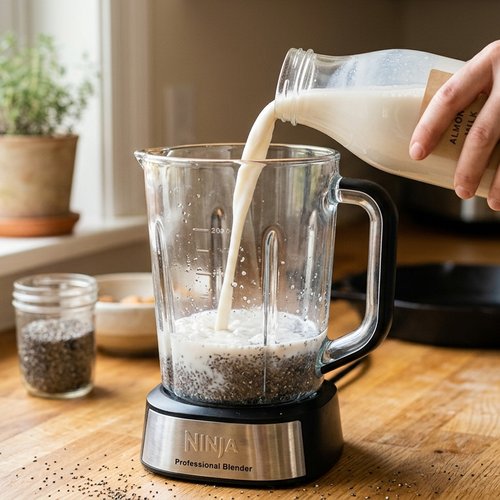
This is where my nutrition expertise comes in handy—the order you layer ingredients in a blender actually affects texture. Pour your milk (whether dairy or plant-based) into the blender first. For keto, use ¾ cup of coconut milk and skip the orange juice entirely—the coconut milk provides enough richness. For vegan, use the full 1 cup oat or soy milk plus ½ cup orange juice. For dairy-free, use 1 cup of your chosen alternative milk plus ½ cup orange juice. This liquid base gives your blades something to grab onto and prevents that awful grinding sound.
Step 3: Layer in Your Frozen Fruit
Add your 2 cups of frozen strawberries directly into the liquid. Don’t thaw them—frozen fruit is actually better because it creates that thick, creamy texture without needing ice (which dilutes your smoothie). The ice-cold temperature also keeps the blending action controlled. For keto, reduce strawberries to 1½ cups and add ½ avocado now. For all other versions, proceed with the full 2 cups of strawberries.
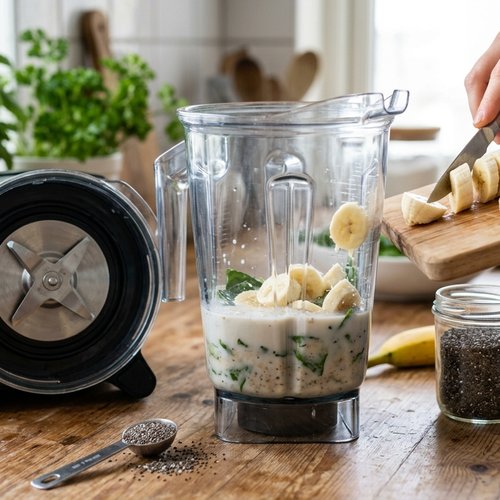
Step 4: Add Your Banana and Chia Seeds
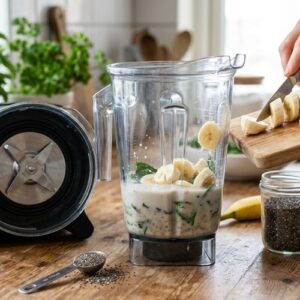
Slice your banana into the blender. For keto, use only ½ banana instead of the full banana—you’re reducing sugar impact. For vegan, use the full banana as written. Now sprinkle in your 2 tablespoons of chia seeds. This is non-negotiable across all versions because chia seeds are naturally keto-friendly, vegan, gluten-free, and dairy-free. They’re one of the few ingredients that works perfectly for everyone. The chia seeds will absorb liquid as you blend, creating a naturally thick texture.
Step 5: Blend Until Completely Smooth
Turn on your blender and start on a low speed for about 10 seconds to break down the frozen fruit. Then gradually increase to high speed and blend for about 45 seconds total. You’re looking for a texture that’s completely smooth with no ice crystals visible—think soft-serve ice cream consistency, not thin like juice. For all dietary versions, blend for the same amount of time. Stop and do a quick visual check: if you see any frozen chunks, blend another 15 seconds.
Step 6: Taste and Adjust Sweetness
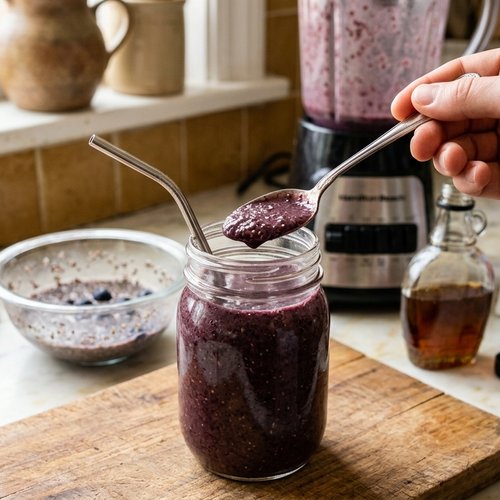
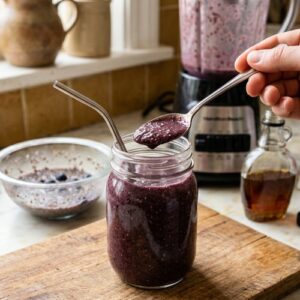
Pour a tiny bit into a spoon and taste it before you commit. Frozen fruit is less sweet than fresh fruit, so you might want to add that optional tablespoon of honey or maple syrup. For keto, skip the honey entirely—the banana and strawberries provide enough natural sweetness, and adding sweetener defeats the purpose of the low-carb approach. For vegan, use maple syrup instead of honey. For dairy-free, either honey or maple syrup works, depending on your other dietary needs. Add sweetener only if you taste it and think “I want this sweeter.” Not everyone does, and that’s perfectly fine.
Step 7: Divide and Serve Immediately
Pour your smoothie into two glasses right away. Chia seeds start absorbing liquid immediately, so the texture changes if you wait too long. This recipe makes 2 generous servings (about 16 ounces each), which is perfect for sharing or for one person who wants a filling breakfast smoothie. For all versions, serve immediately after blending for the best texture.
Nutrition Comparison Across Versions
I want to be transparent about what you’re actually consuming, because that’s part of my job as a registered dietitian. Here’s a side-by-side breakdown based on USDA nutrition data and industry standards. These numbers are for one serving (16 ounces), and I’ve included macros because that’s what matters most when you’re following a specific dietary approach.
- Standard Version (with 1% milk and orange juice): 240 calories | 6g protein | 52g carbs | 3g fat | 9g fiber | Perfect for general wellness and balanced nutrition
- Keto Version (with coconut milk, ½ avocado, 1½ cups strawberries): 185 calories | 4g protein | 18g net carbs | 11g fat | 6g fiber | Keeps you in ketosis while providing sustained energy
- Vegan Version (with oat milk and maple syrup): 255 calories | 7g protein (with added pea protein powder; 4g without) | 48g carbs | 4g fat | 10g fiber | Complete amino acid profile without animal products
- Dairy-Free Version (with coconut or almond milk): 220 calories | 5g protein | 50g carbs | 4g fat (with almond) / 8g fat (with coconut) | 9g fiber | Creamy and satisfying despite no dairy
According to USDA dietary guidelines, all four versions meet the daily fiber recommendation (25-30g for women, 38g for men) when paired with other meals. The keto version has the lowest carbohydrate load, while the standard and vegan versions provide more carbohydrates for sustained energy throughout the morning.
How Each Version Tastes Different
I’m going to be honest with you because that’s what I do in my practice—there’s no point in pretending all versions taste identical. They don’t, and that’s actually wonderful because you get to choose based on your taste preference and your dietary needs.
The Standard Version tastes like a strawberry-orange creamsicle—bright, citrusy, naturally sweet. The banana adds body and richness without overpowering the fruit flavors. This is what most people think of when they imagine a “smoothie.”
The Keto Version is more subtle and sophisticated. The avocado adds a buttery richness that mellows the strawberry tartness. Orange juice is completely absent, so you lose that bright citrus pop. Instead, you get a tropical, almost creamy flavor. It tastes more like a dessert smoothie than a breakfast smoothie, which is why some keto followers love it and others find it too indulgent. The texture is noticeably thicker—almost spoonable.
The Vegan Version tastes nearly identical to the standard version if you use oat milk, which has a naturally sweet flavor that mimics dairy milk beautifully. If you choose almond milk, you’ll notice a slightly nuttier undertone. It’s light and refreshing without any off-flavors.
The Dairy-Free Version with Coconut Milk brings tropical notes that you don’t get with other milks. It’s sweeter than the standard version because coconut milk has natural sugars. With almond milk, it’s closer to the standard version but slightly thinner in texture.
Can I Store This Chia Smoothie?
Short answer: not really, and here’s why. Chia seeds absorb liquid rapidly, which means your beautiful smooth smoothie becomes a thick, pudding-like drink within 30 minutes. If you must make it ahead, store it in an airtight container in the refrigerator for maximum 4 hours, and be prepared for a thicker texture. The fruit doesn’t separate or spoil in that timeframe, but the consistency changes dramatically.
A better strategy is to prep your ingredients the night before. Portion your frozen strawberries, banana slices, and chia seeds into individual containers or freezer bags. In the morning, dump everything into the blender with your milk and you’re done in 2 minutes. This is honestly my favorite make-ahead hack because it reduces morning friction without compromising texture.
If you prefer a thicker, pudding-like texture, you can intentionally make it ahead. Some of my clients actually want that spoon-through-with-a-straw consistency, especially if they’re eating it at their desk. In that case, blend it the night before and store it in a mason jar for up to 12 hours. The chia seeds will continue absorbing liquid, and you’ll end up with something between a smoothie and a chia pudding.
What to Serve With Your Chia Smoothie?
I don’t recommend pairing this smoothie with a heavy breakfast because it’s already substantial (remember, it’s 240+ calories depending on your version). Instead, think of it as part of a balanced breakfast plate. Since I spend my professional life helping people balance nutrition at gatherings, I always suggest pairing it with something that adds variety to your meal.
- Greek yogurt (for standard, dairy-free using coconut yogurt, and keto versions) – adds extra protein and creates a satisfying bowl situation if you pour your smoothie over it
- Whole grain toast with almond butter (for vegan and standard versions) – balances the carbs from the smoothie with healthy fat and protein
- Granola or granola alternatives (for all versions) – adds crunch and texture contrast; choose keto granola for the keto version
- A handful of nuts (almonds, walnuts, pecans) – works beautifully with all versions and adds sustained energy
- Chia seed or flax seed crackers – complements the chia seeds already in your smoothie and adds whole grains
If you’re serving this at a festive gathering where people have different dietary needs, I recommend pairing it with the strategies I use when hosting inclusive holiday meals. You could also serve it alongside a this simple cake so everyone in the family can eat something they love together.
Expert’s Nutritional Tip: Why Chia Seeds Are the MVPs of Any Dietary Restriction
From my decade of practice, I’ve learned that chia seeds are one of the rare ingredients that check every box. They’re keto-friendly (2 grams of net carbs per tablespoon), vegan (complete plant-based protein), naturally gluten-free, and dairy-free. But here’s what most people don’t realize: they’re also a source of ALA omega-3 fatty acids, which your body converts to EPA and DHA (the same fatty acids found in fish). If you’re vegan or dairy-free and concerned about omega-3 intake, chia seeds are your friend. The American Heart Association recommends 1-2 tablespoons daily for general wellness, and this recipe fits that perfectly. I add them to almost every breakfast variation I recommend because they’re an invisible nutritional upgrade.
Common Mistakes to Avoid
After helping countless people navigate dietary modifications, I’ve noticed the same patterns repeat. Let me save you the frustration.
Mistake #1: Thawing your fruit ahead of time. I cannot stress this enough—frozen fruit is your friend. When you thaw strawberries and banana before blending, they become watery, and your smoothie will taste diluted. The cold temperature is what creates that creamy texture without needing ice. Keep everything frozen until the moment you blend.
Mistake #2: Skipping the liquid layering step. If you dump all your frozen fruit into the blender without liquid first, your blender motor will struggle. I’ve seen people give up on smoothies because they thought their blender was broken—nope, just needed better technique. Always add liquid first so your blades have something to grab onto.
Mistake #3: Using more chia seeds than the recipe calls for. I see this constantly, and I understand the logic—more nutrients must be better, right? Not necessarily. More than 2 tablespoons creates a texture that’s so thick it’s almost undrinkable. Trust the recipe.
Mistake #4: Forgetting to taste and adjust. Frozen fruit varies in sweetness depending on the season and source. Don’t add honey blindly—taste first, then decide. This is especially important for the keto version where you want to keep sugar minimal.
Make-Ahead Guide for Busy Mornings
I developed this system for families who ask me how to maintain nutrition during chaotic holiday seasons and hectic weekday mornings. It actually works year-round.
Sunday Prep (5 minutes): Wash and slice 1 large banana. Portion it into 5 small containers or freezer bags—one for each weekday morning. Store frozen strawberries in individual portions (2 cups per portion) in freezer bags. Label everything with the date. Your prep is done.
Morning Routine (2 minutes): Grab one bag of banana slices and one bag of strawberries. Add 2 tablespoons of chia seeds (I keep a small measuring spoon right next to my blender). Pour in 1 cup of your chosen milk and ½ cup orange juice (or your version’s substitution). Blend. Drink. Done.
Alternative: Chia Seed Prep. You can also portion chia seeds ahead into small glass jars with the measurements pre-calculated. Some mornings when I’m extra busy, I’ll combine the chia seeds with the orange juice in a mason jar the night before and let them soak. The next morning, I just add that to the blender with milk and frozen fruit. It adds 30 seconds to your prep but feels incredibly efficient when you’re tired.
Seasonal Variations
One of my favorite aspects of working with seasonal eating is watching how ingredients change throughout the year. This smoothie adapts beautifully to what’s available, and the nutrition actually improves when you follow seasons.
Spring Version: Replace strawberries with fresh raspberries (lower carb, higher antioxidant profile). Add a handful of fresh spinach for iron content. The flavor stays bright and fruity while you get a nutrition upgrade.
Summer Version: Use fresh strawberries and raspberries instead of frozen. Add fresh orange juice instead of bottled. Include a small handful of fresh mint for a refreshing twist. The result is lighter and more vibrant than the standard winter version.
Fall Version: Swap orange juice for fresh apple juice. Use frozen blueberries instead of or alongside strawberries. Add ¼ teaspoon of cinnamon and a tiny pinch of nutmeg for warm spice notes. It tastes like a deconstructed apple crisp in smoothie form.
Winter Version: Stick with frozen strawberries and orange juice—they’re literally designed for winter use because they store well. This is the recipe as written.

Chia Smoothie Recipe
Ingredients
Method
- Before you even touch the blender, set out everything you need. I learned this trick from working with families during busy holiday mornings—mise en place (everything in its place) saves time and prevents mistakes. For the keto version, have your avocado halved and ready to go. For the vegan version, make sure your plant-based milk is chilled. For dairy-free, keep your coconut or almond milk at room temperature for better blending. Measure your frozen strawberries into a bowl so you can see exactly how much you're using. Peel and slice your banana if you're using the standard or vegan version.
- This is where my nutrition expertise comes in handy—the order you layer ingredients in a blender actually affects texture. Pour your milk (whether dairy or plant-based) into the blender first. For keto, use ¾ cup of coconut milk and skip the orange juice entirely—the coconut milk provides enough richness. For vegan, use the full 1 cup oat or soy milk plus ½ cup orange juice. For dairy-free, use 1 cup of your chosen alternative milk plus ½ cup orange juice. This liquid base gives your blades something to grab onto and prevents that awful grinding sound.
- Add your 2 cups of frozen strawberries directly into the liquid. Don't thaw them—frozen fruit is actually better because it creates that thick, creamy texture without needing ice (which dilutes your smoothie). The ice-cold temperature also keeps the blending action controlled. For keto, reduce strawberries to 1½ cups and add ½ avocado now. For all other versions, proceed with the full 2 cups of strawberries.
- Slice your banana into the blender. For keto, use only ½ banana instead of the full banana—you're reducing sugar impact. For vegan, use the full banana as written. Now sprinkle in your 2 tablespoons of chia seeds. This is non-negotiable across all versions because chia seeds are naturally keto-friendly, vegan, gluten-free, and dairy-free. They're one of the few ingredients that works perfectly for everyone. The chia seeds will absorb liquid as you blend, creating a naturally thick texture.
- Turn on your blender and start on a low speed for about 10 seconds to break down the frozen fruit. Then gradually increase to high speed and blend for about 45 seconds total. You're looking for a texture that's completely smooth with no ice crystals visible—think soft-serve ice cream consistency, not thin like juice. For all dietary versions, blend for the same amount of time. Stop and do a quick visual check: if you see any frozen chunks, blend another 15 seconds.
- Pour a tiny bit into a spoon and taste it before you commit. Frozen fruit is less sweet than fresh fruit, so you might want to add that optional tablespoon of honey or maple syrup. For keto, skip the honey entirely—the banana and strawberries provide enough natural sweetness, and adding sweetener defeats the purpose of the low-carb approach. For vegan, use maple syrup instead of honey. For dairy-free, either honey or maple syrup works, depending on your other dietary needs. Add sweetener only if you taste it and think "I want this sweeter." Not everyone does, and that's perfectly fine.
- Pour your smoothie into two glasses right away. Chia seeds start absorbing liquid immediately, so the texture changes if you wait too long. This recipe makes 2 generous servings (about 16 ounces each), which is perfect for sharing or for one person who wants a filling breakfast smoothie. For all versions, serve immediately after blending for the best texture.
FAQs
Can I make this smoothie without a high-powered blender?
Yes, but with modifications. If you have a standard blender, thaw your banana slightly (leave it on the counter for 10 minutes) and use only 1½ cups of frozen strawberries instead of 2 cups. Start blending on low for a full 30 seconds before increasing speed. You might need to blend for up to 60-90 seconds total. The texture will be slightly less smooth, but absolutely drinkable. If you have a really old or weak blender, consider letting your frozen fruit sit at room temperature for 15 minutes before blending—it’ll reduce the strain on your motor.
What if I want to add protein powder to any of these versions?
I recommend it, especially for the vegan version where protein can be lower. Add 1 scoop (about 20-25 grams) of your chosen protein powder. For the vegan version, use plant-based protein (pea, hemp, or soy). For the keto version, use vanilla collagen powder or a low-carb protein powder. For the standard and dairy-free versions, any quality protein works. Add the powder when you add the chia seeds so it blends evenly. Expect the texture to be slightly thicker—you might need to add an extra ¼ cup of liquid.
Is this smoothie safe for someone with a nut allergy?
The base recipe is nut-free and safe. However, watch your milk substitutions—almond milk is obviously out. For dairy-free versions, use oat milk, soy milk, or coconut milk instead. Also check your protein powder labels if you’re adding protein, as some brands have nut contamination warnings. Always read labels carefully if allergies are involved.
Can I use fresh strawberries instead of frozen?
Technically yes, but the result won’t be as thick or creamy. Fresh strawberries contain water, and they’ll make your smoothie thinner. If you want to use fresh strawberries, either add ½ cup of ice to compensate, or use 3 cups of fresh strawberries instead of 2 cups frozen. Fair warning: the texture and flavor will be noticeably different—less indulgent, more juice-like.
How much of this recipe counts toward my daily water intake?
A typical smoothie has about 14-16 ounces of liquid, which counts as roughly one cup toward your daily intake. While the liquid is part of your hydration, smoothies are thicker than plain water because they contain fruit and seeds. I recommend still drinking additional water throughout the day rather than relying on smoothies as your primary hydration source. The chia seeds also absorb liquid in your stomach, so staying well-hydrated is important when consuming chia seeds regularly.
More Diet-Friendly Recipes
- Banana Cream Pie Nilla Wafers Recipe – a festive dessert that can be adapted for dietary restrictions and works beautifully at inclusive gatherings
- Banana Pie Recipe With Pudding – another banana-forward dessert with versions for different dietary needs
Your Dietary Restrictions Don’t Mean Food Restrictions
I started my nutrition practice over a decade ago because I watched people feel left out during family celebrations. Someone would be keto, someone else vegan, and suddenly that shared meal became three separate meals. What I’ve learned is that with a little planning and creativity, everyone gets to participate. This chia smoothie is my proof—one recipe, unlimited versions, and absolutely no one sacrifices nutrition or taste.
Whether you’re here because you recently adopted a new dietary approach or because you’re trying to accommodate someone you love, I want you to know that this works. You don’t have to be perfect at these substitutions. You can mix and match, create your own version, and experiment. That’s actually how I discovered my favorite variation (keto with a splash of coconut cream). Your body, your kitchen, your rules.
I can’t wait to share many more delicious and festive recipes with you!