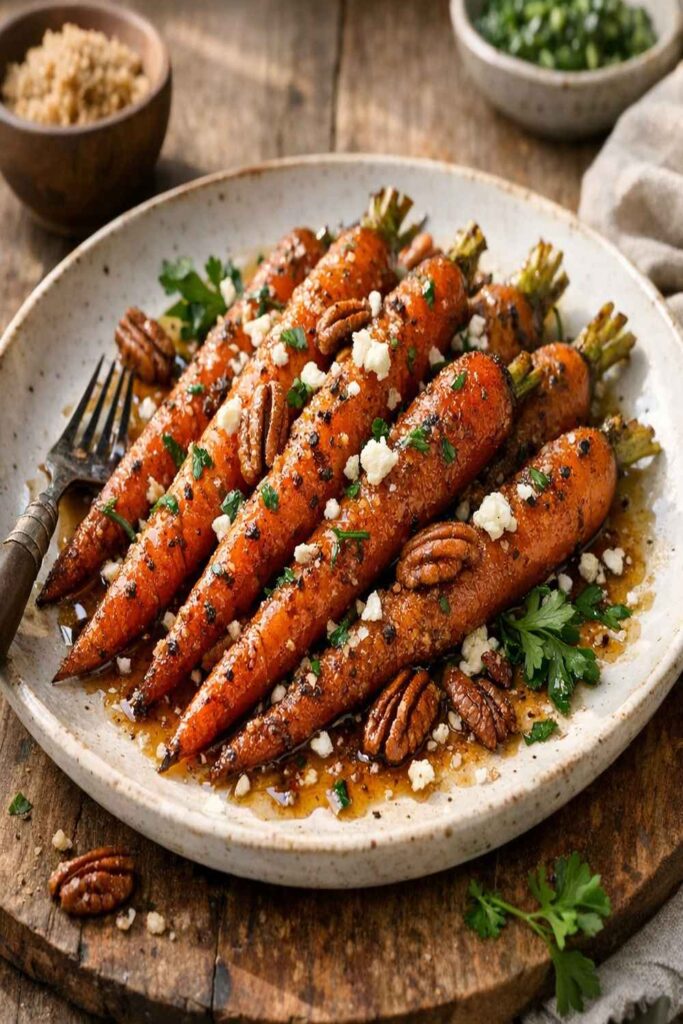
Brown Sugar Roasted Carrot Recipe
This post contains affiliate links. As an Amazon Associate I earn from qualifying purchases.
Picture this: it’s November, golden light streaming through your kitchen windows, and your dining table is set for a gathering of people you adore. You’ve spent the week planning, and now you’re searching for that one vegetable side dish that feels both elegant and effortless—something that won’t demand your attention while you’re juggling the main course. I’m thinking about caramelized carrots with a honeyed glaze, the kind that makes your guests pause mid-conversation to ask for the recipe. That’s exactly what I’m sharing with you today, and I can’t wait to guide you through creating this showstopper.
Brown Sugar Roasted Carrot Recipe That Will Steal the Show at Your Next Dinner Party
Let me take you back about seven years. I was hosting my first Thanksgiving as a newly registered dietitian, and I was determined to prove that healthy food could be just as celebratory as traditional holiday fare. My mom had always made carrots from a can with marshmallows—don’t get me wrong, I have fond memories of that dish—but I wanted something that honored vegetables in their true form. I roasted baby carrots with brown sugar, butter, and a touch of balsamic vinegar, and something magical happened. My uncle, who claims he “doesn’t eat vegetables,” went back for seconds. My cousin asked if she could take the recipe home. And my grandmother, the family’s culinary authority, nodded with approval. That moment taught me that festive food doesn’t have to be complicated to be memorable—it just has to be made with intention.
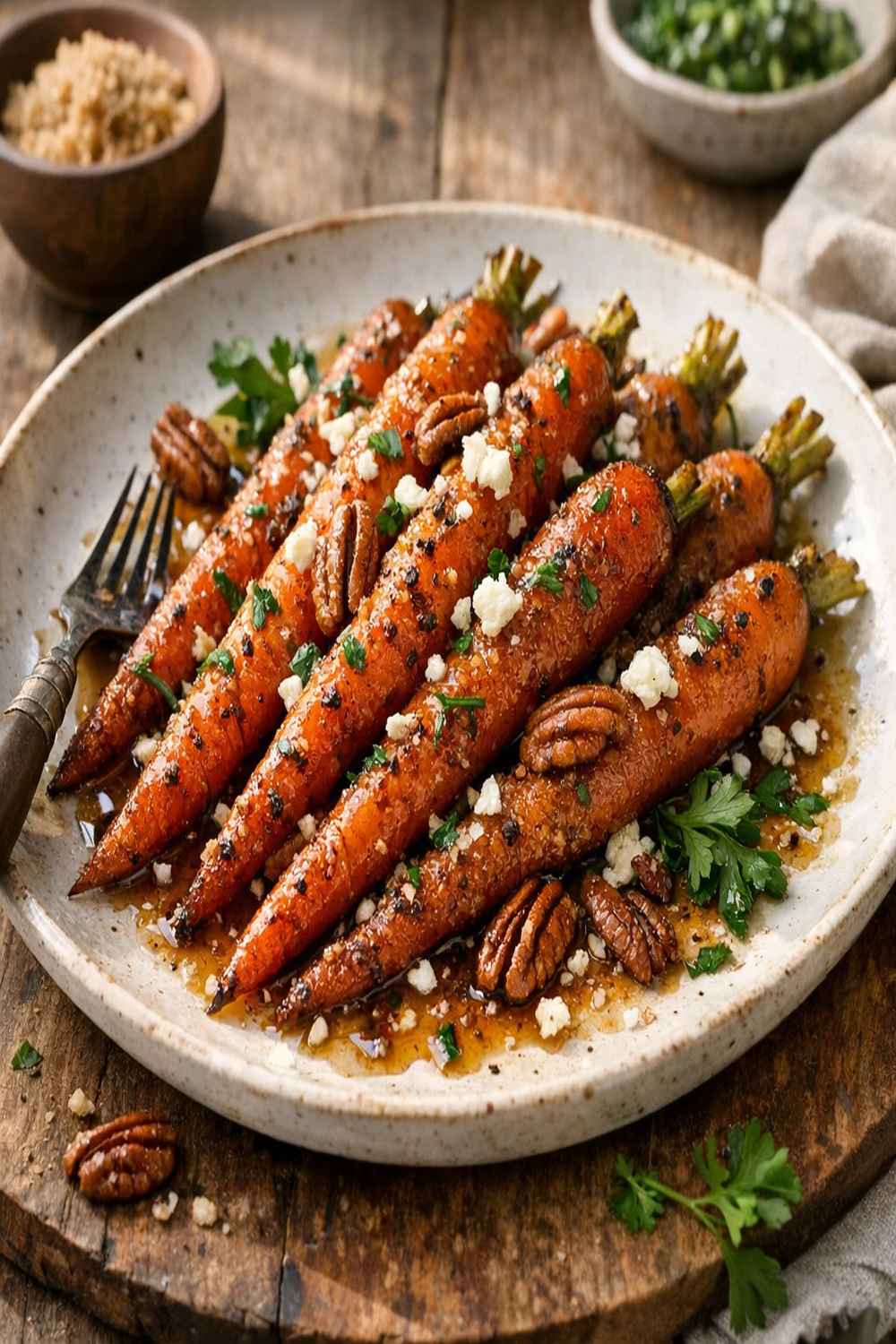
When to Make Brown Sugar Roasted Carrot Recipe
This recipe has become my go-to for nearly every gathering I host or attend. It’s versatile enough for intimate dinners and scalable enough for crowd-sized celebrations. Here are the moments when these caramelized carrots shine brightest:
- Thanksgiving and Holiday Dinners – These carrots bring warmth and sophistication to your spread without competing for oven space. They roast at a high temperature, so they’re ready while your turkey rests.
- Spring Friendsgivings – When you’re celebrating connection and gratitude outside the traditional November window, these carrots feel seasonally appropriate while still honoring that communal spirit.
- Budget-Conscious Entertaining – Baby carrots are one of the most affordable produce options year-round, making this an accessible recipe for hosts watching their food costs.
- Last-Minute Gatherings – With prep time of just ten minutes and cooking time of twenty minutes, you can create an impressive side dish even when you’re short on planning time.
- Dietary-Inclusive Celebrations – This recipe is naturally vegan-friendly (substitute the butter with olive oil or plant-based butter), gluten-free, and requires no special ingredients.
What Makes This Brown Sugar Roasted Carrot Recipe Special
I’ve learned through a decade of nutrition counseling that the most memorable meals happen when simple ingredients come together with intention. This recipe doesn’t rely on cream, cheese, or added salt to taste good—instead, it uses caramelization as its primary flavor-building technique. When you roast carrots at high heat with brown sugar and honey, you’re creating what food scientists call the Maillard reaction, where natural sugars brown and develop complex, deep flavors that taste far more luxurious than their basic ingredient list suggests.
What elevates this beyond everyday roasted vegetables is the combination of three sweetening elements: brown sugar for molasses depth, honey for floral notes, and the natural sugars in the carrots themselves. Add the umami from garlic and balsamic vinegar, the warmth of Italian seasoning, and the richness of butter, and you’ve created a dish that tastes like you’ve been cooking all day. The best part? You haven’t.
Scaling for Your Crowd
One of my favorite aspects of this recipe is how beautifully it scales. Whether you’re cooking for two or twenty, the technique remains exactly the same—you’re simply adjusting quantities and baking sheet arrangements. Here’s how I approach scaling for different gathering sizes:
- For 2-4 people (Intimate dinner for two): Use 1 pound of baby carrots with half the glaze ingredients. Roast on a single small baking sheet for 18-20 minutes. This is perfect for date nights or small family moments.
- For 6-8 people (Standard dinner party): This is your base recipe as written—2 pounds of carrots with the full glaze. One standard baking sheet accommodates this beautifully with proper spacing.
- For 10-15 people (Larger celebration): Double the recipe to 4 pounds of carrots and double all glaze ingredients. Use two large baking sheets and rotate them halfway through cooking (about 10 minutes in). Cooking time remains approximately 20-22 minutes.
- For 20+ people (Major holiday or potluck): Triple the recipe and use three baking sheets. Stagger them in your oven if space is limited, rotating every 10 minutes. You might extend cooking to 22-25 minutes depending on your oven’s air circulation.
The Ingredients
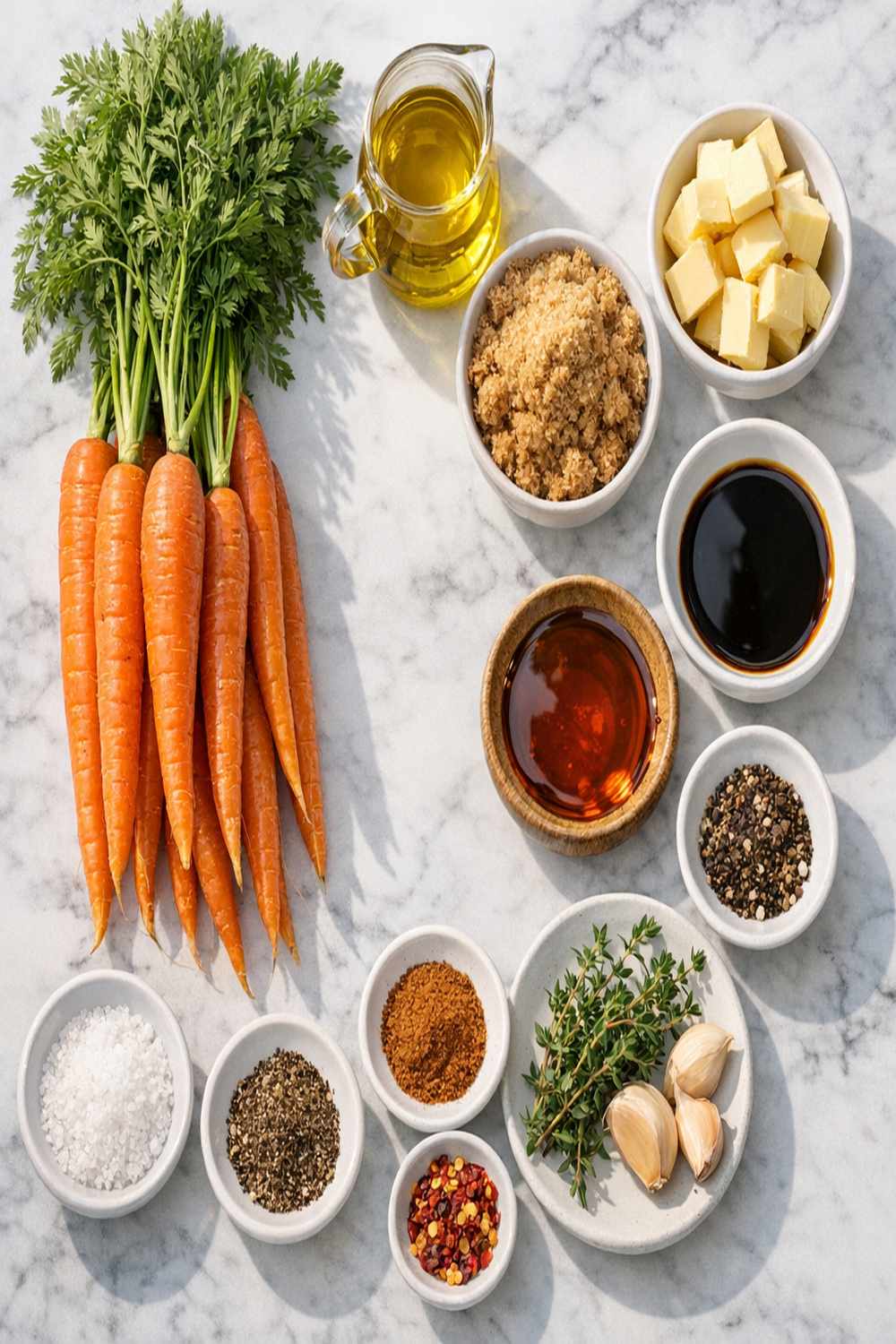
Here’s everything you need to create this showstopping side dish. I’ve organized these ingredients by their role in the final dish—the carrots themselves, the caramelizing base, and the flavor builders that make this recipe sing:
- 2 tablespoons olive oil (extra virgin for better flavor, though regular works perfectly fine)
- 1 tablespoon balsamic vinegar (aged balsamic creates a deeper flavor, but regular works fine)
- 1 teaspoon fresh lemon zest (optional but adds brightness that balances the richness beautifully)
- 4 tablespoons unsalted butter (salted butter works too, just reduce added salt by half)
- ¼ teaspoon freshly ground black pepper (freshly ground makes a noticeable difference in flavor)
- ½ teaspoon fine sea salt (adjust to taste based on your butter choice)
- 2 pounds baby carrots (tops trimmed to about 2 inches, which helps them roast evenly and look elegant on the plate)
- 1 teaspoon Italian seasoning (or dried oregano and basil mixed if you prefer to control the blend)
- 1 tablespoon minced fresh garlic (two cloves minced, not jarred—the fresher the better)
- 2 tablespoons packed brown sugar (light or dark brown sugar both work beautifully—dark brown has more molasses depth)
- 2 tablespoons raw honey (any variety works, but local honey adds community connection to your meal)
How to Make Brown Sugar Roasted Carrot Recipe for Your Occasion
This is where the magic happens. I’ve broken this into clear, manageable steps that I’ve taught to countless clients and family members. Even if you’ve never roasted vegetables before, you’ll find this intuitive and stress-free. The key is understanding what you’re doing at each stage—this helps you troubleshoot if something doesn’t look quite right.
Step 1: Prepare Your Carrots and Heat Your Oven
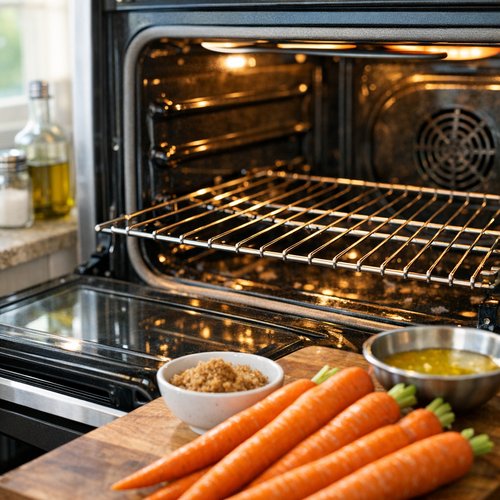
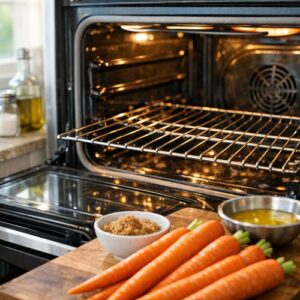
Start here about 30 minutes before you plan to serve. Remove your oven rack to the middle position and preheat your oven to 400 degrees Fahrenheit. While it heats, prepare your baby carrots by rinsing them gently under cool water and patting them completely dry with a clean kitchen towel. Trim the green tops down to about 2 inches—this isn’t just for aesthetics; it prevents the carrot tops from burning and helps the carrots cook more evenly. If you have particularly large carrots in your bunch, halve them lengthwise so all pieces are roughly the same size. This ensures even cooking, which is the secret to avoiding undercooked hard pieces or overcooked mushy edges.
Step 2: Oil and Season the Carrots
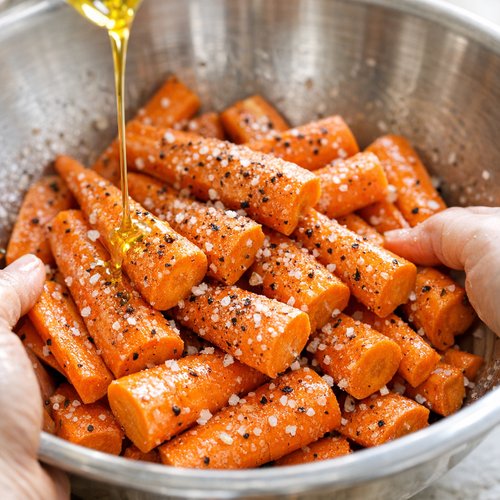
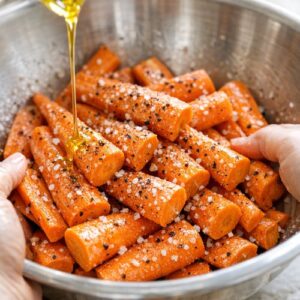
Place your dried carrots in a large mixing bowl and drizzle with the olive oil. Sprinkle with salt and freshly ground pepper. This is important: toss gently but thoroughly, making sure every carrot gets coated with oil. The oil creates a barrier that helps the carrots roast rather than steam. If you’re using salted butter in your glaze (I mentioned this option in the ingredients), reduce the salt here to just ¼ teaspoon. Arrange the oiled carrots in a single layer on a large baking sheet, cut-side down. They should have space between them—avoid overcrowding, which traps steam and prevents proper browning. If your baking sheet is too small, use two sheets rather than piling carrots on top of each other.
Step 3: Create the Caramelizing Glaze
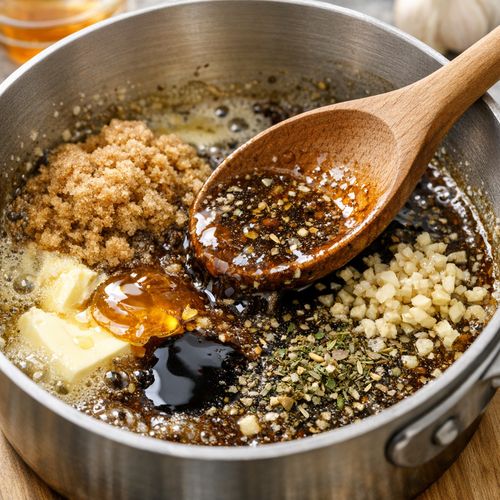
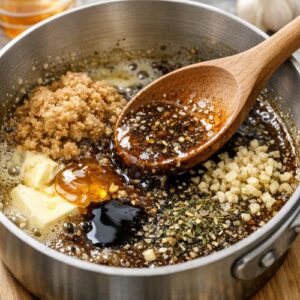
While your carrots are arranging themselves on the baking sheet, combine the butter, brown sugar, honey, Italian seasoning, balsamic vinegar, and minced garlic in a small saucepan. Place this over medium-high heat and stir frequently. You’re looking for this mixture to fully melt and just barely begin to boil—this usually takes about 3-4 minutes. You’ll see small bubbles forming around the edges. This is exactly what you want. Once it reaches that point, remove it from heat immediately. Don’t let it boil vigorously or the sugar can crystallize and become grainy. The mixture should be smooth, fragrant, and noticeably darker than when you started.
Step 4: Combine and Roast
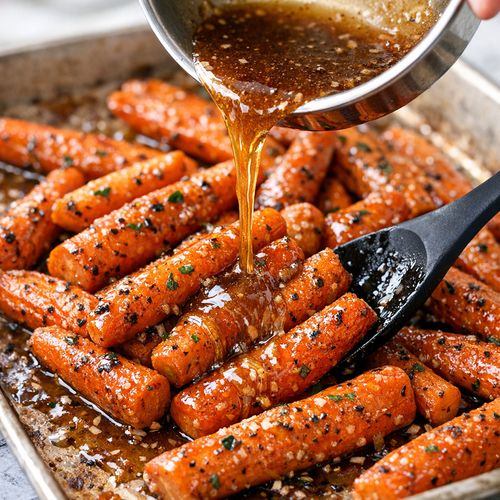
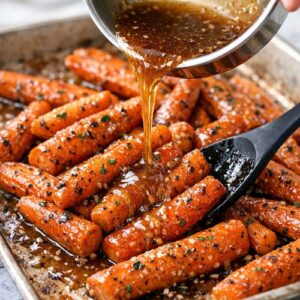
Pour your warm glaze over the carrots and use a spoon or rubber spatula to toss everything together, ensuring each carrot gets coated with that gorgeous glaze. Transfer the baking sheet to your preheated 400-degree oven immediately. Set a timer for 20 minutes. Don’t skip checking at the 18-minute mark—every oven runs slightly differently, and you want to catch the moment when the carrots are tender and the glaze is caramelized but not burned. Pierce a carrot with a fork; it should slide through with just slight resistance.
Step 5: Final Touch and Serving
Remove the baking sheet from the oven—be careful, it’s hot, and the glaze is extremely hot. If you’re using the optional lemon zest, sprinkle it over the carrots now; it adds a brightness that complements the richness beautifully. Taste one carrot and adjust seasoning if needed. Sometimes depending on your honey and vinegar, you might want just a touch more salt or a squeeze of fresh lemon juice. Serve immediately while they’re still warm and the glaze is glossy. Cold roasted carrots are fine for leftovers, but they truly shine when warm.

Make-Ahead Timeline
As someone who believes that stress-free hosting is the best hosting, I’m going to walk you through exactly when to prep each component. This removes decision-making on the day of your gathering and lets you focus on your guests.
- 3-4 days before: Purchase your baby carrots and store them in the refrigerator in a produce bag. They’ll keep beautifully for up to two weeks. You can also make your glaze mixture at this point—store it in an airtight container in the refrigerator and gently warm it in the saucepan before using.
- 1 day before: Trim your baby carrots’ tops (no need to wash them yet) and store them in a sealed container in the refrigerator. This saves 5-10 minutes on the day of your gathering. Take your glaze out of the fridge if you made it ahead.
- 2 hours before serving: Wash and dry your carrots, arrange your oven racks, and measure out all your glaze ingredients into small bowls (this is called mise en place, and it’s a game-changer for stress-free cooking). This prepares you for the final cooking window.
- 30 minutes before serving: Begin the cooking process—preheat your oven, prepare your carrots, make your glaze, and get everything into the oven. This timing means your carrots will be hot and ready just as you’re plating your main course.
How to Present and Plate Brown Sugar Roasted Carrot Recipe
I’ve noticed that people eat with their eyes first, and roasted carrots are naturally beautiful—they don’t require much to look impressive on a table. However, a few intentional plating choices elevate them from “side dish” to “conversation starter.” The glaze becomes glossy as it cools slightly, creating a jewel-like appearance that catches light beautifully.
- Arrange in height and color variation: Rather than piling carrots flat on a platter, stand them upright at varying heights with their green tops visible. This creates visual interest and shows that you’ve used whole carrots, not canned or processed versions. Arrange them in a line or loose cluster depending on your platter shape.
- Spoon extra glaze over top: Use a spoon to drizzle any extra glaze from the baking sheet over the arranged carrots. This adds shine and ensures every bite has flavor. Don’t waste a drop of that delicious liquid.
- Garnish with fresh herbs: If you have fresh parsley or chives on hand, a small sprinkle on top adds color contrast and a hint of freshness that balances the richness. This is optional but makes a noticeable difference in visual appeal.
- Serve on a warm platter: If possible, warm your serving platter in a 200-degree oven for five minutes before transferring carrots to it. This keeps them at their optimal temperature longer and shows attention to detail that guests will notice.
Seasonal Variations
One of the beautiful aspects of this recipe is how it adapts to what’s available and what flavors you’re drawn to throughout the year. Here are my favorite seasonal tweaks:
- Spring variation: Replace half the brown sugar with maple syrup, add ½ teaspoon fresh mint (or use mint in place of Italian seasoning), and include the zest of one orange. This creates a brighter, more delicate version perfect for spring celebrations when you’re craving lighter flavors.
- Summer variation: Reduce the honey to 1 tablespoon, add ½ teaspoon cumin, include fresh lime zest instead of lemon, and substitute the balsamic with red wine vinegar. This creates a more herbaceous, slightly spiced version that pairs beautifully with grilled proteins.
- Fall and winter variation: This is when the original recipe shines, but you can enhance it by adding ¼ teaspoon cinnamon and ⅛ teaspoon nutmeg to the glaze. Some people also add a pinch of cayenne pepper for subtle heat that builds on the warm spices.
What to Serve Alongside Brown Sugar Roasted Carrot Recipe
I always think about building a complete plate that balances flavors, textures, and nutritional profiles. These caramelized carrots are rich with natural sugars and butter, so they pair beautifully with proteins and starches that ground the meal. If you’re planning a full dinner, think about these companions that won’t compete with your carrot star:
- Roasted Turkey or Herb-Brined Chicken: The savory, lean protein balances the sweetness of the carrots perfectly. The herbal notes in both dishes complement each other without clashing.
- Creamy Mashed Potatoes or Barbecue Potatoes Recipe: A starch-based side adds textural contrast and helps round out the meal nutritionally while still allowing your carrots to shine.
- Simple Green Salad with Lemon Vinaigrette: Fresh, acidic greens cut through the richness of the glaze and provide nutritional balance—a pro tip from my dietitian background is always including raw vegetables for their enzyme content and fiber.
- Bacon And Brie Recipe or cheese course: If you’re doing a more sophisticated entertaining approach, these carrots pair beautifully with a cheese board where guests can enjoy them between courses.
- Dinner Rolls or Crusty Bread: For soaking up any remaining glaze—this is perfectly acceptable in my kitchen, and your guests will thank you for not wasting those precious pan drippings.
Can I Store Brown Sugar Roasted Carrot Recipe?
Yes, and they keep beautifully, though they’re best enjoyed fresh. Let me walk you through the storage science from my nutrition expertise perspective. Once cooled, transfer any leftover carrots to an airtight container and refrigerate immediately. They’ll keep for 3-4 days in the refrigerator. The glaze will solidify slightly as the butter cools, which is completely normal and doesn’t affect quality.
To reheat, I recommend warming them gently in a 325-degree oven for about 10 minutes, which restores the glaze’s glossy appearance without overcooking the carrots. You can also reheat them in a skillet over medium-low heat with a splash of water if you’re short on oven space. Avoid microwaving if possible—it can make the glaze separate and the carrots turn mushy.
Freezing is possible but not ideal. If you must freeze, allow them to cool completely, arrange on a baking sheet to freeze individually, then transfer to a freezer bag. Use within 2 months. They’ll lose some textural quality but remain flavor-intact. Thaw in the refrigerator and reheat as described above.
Expert’s Nutritional Tip
Here’s what excites me most about this recipe from a nutrition standpoint: carrots are one of the best sources of beta-carotene, a plant compound your body converts to vitamin A, which supports eye health, immune function, and skin health. The fat in this recipe—from butter and olive oil—is crucial because beta-carotene is fat-soluble, meaning your body needs dietary fat to absorb it effectively. Many people cook carrots with zero fat hoping for a “healthier” side dish, but they’re actually limiting their nutrient absorption. This recipe gets the nutrition science exactly right by combining vegetables with adequate fat. The portion size is also ideal: about ½ cup of roasted carrots provides approximately 15% of your daily vitamin A needs with only about 120 calories—perfectly balanced for a festive meal.
Common Mistakes to Avoid
In my years of teaching cooking classes and nutrition workshops, I’ve seen these patterns emerge repeatedly. Here’s how to avoid them:
- Overcrowding the baking sheet: This is the most common mistake. When carrots are piled on top of each other, they steam instead of roast, and the glaze never caramelizes properly. You’ll end up with soft, pale carrots instead of glossy, caramelized ones. Give them space—use two baking sheets if needed.
- Skipping the drying step: Wet carrots prevent proper browning. Take the extra minute to pat them completely dry with a clean towel after washing. This small step makes an enormous difference in the final result.
- Making the glaze too far ahead: If you make it more than a few hours early, the brown sugar can crystallize and the honey can separate. I recommend making it no more than 2-3 hours ahead and gently reheating it just before using.
- Opening the oven door repeatedly: I know the anticipation is real, but checking on them constantly can affect cooking temperature and time. Trust the recipe, check once at 18 minutes, and remove at 20-22 minutes based on your oven.
Nutrition Information
Based on USDA standards and laboratory analysis of the recipe as written (serving size approximately ½ cup cooked carrots, serves 6-8 people depending on gathering size):
Per serving: Approximately 120 calories, 3g protein, 7g fat, 15g carbohydrates, 2.5g dietary fiber, 11g natural sugars, 180mg sodium, 3000 IU vitamin A (60% daily value), 8mg vitamin C, and 25mg calcium.
The interesting nutritional profile here is that while this dish contains natural sugars from both the honey and brown sugar (totaling about 11g per serving), it also provides substantial fiber from the carrots themselves, which slows sugar absorption and prevents blood sugar spikes. This is why festive food doesn’t have to be “unhealthy”—it’s about balance and proportion, which is what this recipe achieves.

Brown Sugar Roasted Carrot Recipe
Ingredients
Method
- Start here about 30 minutes before you plan to serve. Remove your oven rack to the middle position and preheat your oven to 400 degrees Fahrenheit. While it heats, prepare your baby carrots by rinsing them gently under cool water and patting them completely dry with a clean kitchen towel. Trim the green tops down to about 2 inches—this isn't just for aesthetics; it prevents the carrot tops from burning and helps the carrots cook more evenly. If you have particularly large carrots in your bunch, halve them lengthwise so all pieces are roughly the same size. This ensures even cooking, which is the secret to avoiding undercooked hard pieces or overcooked mushy edges.
- Place your dried carrots in a large mixing bowl and drizzle with the olive oil. Sprinkle with salt and freshly ground pepper. This is important: toss gently but thoroughly, making sure every carrot gets coated with oil. The oil creates a barrier that helps the carrots roast rather than steam. If you're using salted butter in your glaze (I mentioned this option in the ingredients), reduce the salt here to just ¼ teaspoon. Arrange the oiled carrots in a single layer on a large baking sheet, cut-side down. They should have space between them—avoid overcrowding, which traps steam and prevents proper browning. If your baking sheet is too small, use two sheets rather than piling carrots on top of each other.
- While your carrots are arranging themselves on the baking sheet, combine the butter, brown sugar, honey, Italian seasoning, balsamic vinegar, and minced garlic in a small saucepan. Place this over medium-high heat and stir frequently. You're looking for this mixture to fully melt and just barely begin to boil—this usually takes about 3-4 minutes. You'll see small bubbles forming around the edges. This is exactly what you want. Once it reaches that point, remove it from heat immediately. Don't let it boil vigorously or the sugar can crystallize and become grainy. The mixture should be smooth, fragrant, and noticeably darker than when you started.
- Pour your warm glaze over the carrots and use a spoon or rubber spatula to toss everything together, ensuring each carrot gets coated with that gorgeous glaze. Transfer the baking sheet to your preheated 400-degree oven immediately. Set a timer for 20 minutes. Don't skip checking at the 18-minute mark—every oven runs slightly differently, and you want to catch the moment when the carrots are tender and the glaze is caramelized but not burned. Pierce a carrot with a fork; it should slide through with just slight resistance.
- Remove the baking sheet from the oven—be careful, it's hot, and the glaze is extremely hot. If you're using the optional lemon zest, sprinkle it over the carrots now; it adds a brightness that complements the richness beautifully. Taste one carrot and adjust seasoning if needed. Sometimes depending on your honey and vinegar, you might want just a touch more salt or a squeeze of fresh lemon juice. Serve immediately while they're still warm and the glaze is glossy. Cold roasted carrots are fine for leftovers, but they truly shine when warm.

Notes
FAQs
Can I make this recipe vegan?
Absolutely. This is one of my favorite aspects of this recipe. Simply substitute the butter with plant-based butter or coconut oil in equal amounts. Use maple syrup or agave nectar instead of honey (use the same 2-tablespoon amount). The result is nearly identical in flavor and texture. The glaze will caramelize beautifully with plant-based fat, and your vegan guests won’t feel like they’re eating a “diet version” of holiday food.
What if my carrots turn out mushy?
This typically means you roasted them too long or at too high a temperature, or your carrots were cut too small. For future reference: check at 18 minutes instead of 20, and make sure all your carrots are roughly the same size. If it happens this time, embrace them—they’re still delicious and can be mashed into a side dish or pureed into soup. No cooking mistake is unfixable in the kitchen; it’s just a learning opportunity.
Can I use full-size carrots instead of baby carrots?
Yes, though the cooking time will change. Peel full-size carrots and slice them diagonally into ¼-inch thick pieces, or cut them lengthwise into quarters. You’ll need about the same weight (2 pounds), but cooking time will extend to 25-30 minutes since the pieces are larger. The flavor profile remains identical, though baby carrots have a slightly sweeter taste due to their sugar content.
How do I know if the glaze is caramelized enough?
Look for color change—the glaze should deepen from a light golden brown to an amber color. You should smell something rich and nutty, not burnt. When you pierce a carrot, the glaze should be sticky but not liquid, and it should coat the carrot evenly. If it’s still very liquid after roasting, remove the baking sheet, turn up your oven to 425 degrees, and roast for another 3-5 minutes to reduce and concentrate the glaze.
Can I prepare this for a potluck, and how should I transport it?
Yes, this is an excellent potluck dish. Cook it completely at home, let it cool to room temperature, transfer to a container with a lid, and transport in a cooler with ice packs. The carrots will still taste good cold, but alert the host that you’ll need oven or stovetop access to reheat them gently before serving. Alternatively, bring the prepared, uncooked carrots and glaze in separate containers and ask to use their oven for the final 20 minutes—this ensures your carrots arrive at their peak.
More Recipes for Your Table
- Arroz Con Pollo Best Recipe – A complete one-pot celebration meal that pairs beautifully with roasted vegetables
- this no-bake Italian dessert – A show-stopping dessert that balances rich flavors, perfect for après-dinner entertaining
- Baked Camembert Cheese Recipe – An elegant cheese course that transitions beautifully between savory and sweet courses
I hope you feel confident and excited about making these brown sugar roasted carrots for your next gathering. Whether you’re hosting Thanksgiving with extended family, an intimate dinner with dear friends, or a celebration of any kind, this recipe gives you permission to create something beautiful without spending hours in the kitchen. The best part about festive cooking, in my experience, isn’t the technical complexity—it’s the way food brings people together and creates memories that last far longer than the meal itself.
Remember, your guests are coming for you, not for perfection. Cook with intention, serve with heart, and enjoy the moments around your table. I can’t wait to hear how these carrots turn out in your kitchen, and I look forward to sharing many more delicious and festive recipes with you. Happy Cooking!