Chicken Hominy Recipe
This post contains affiliate links. As an Amazon Associate I earn from qualifying purchases.
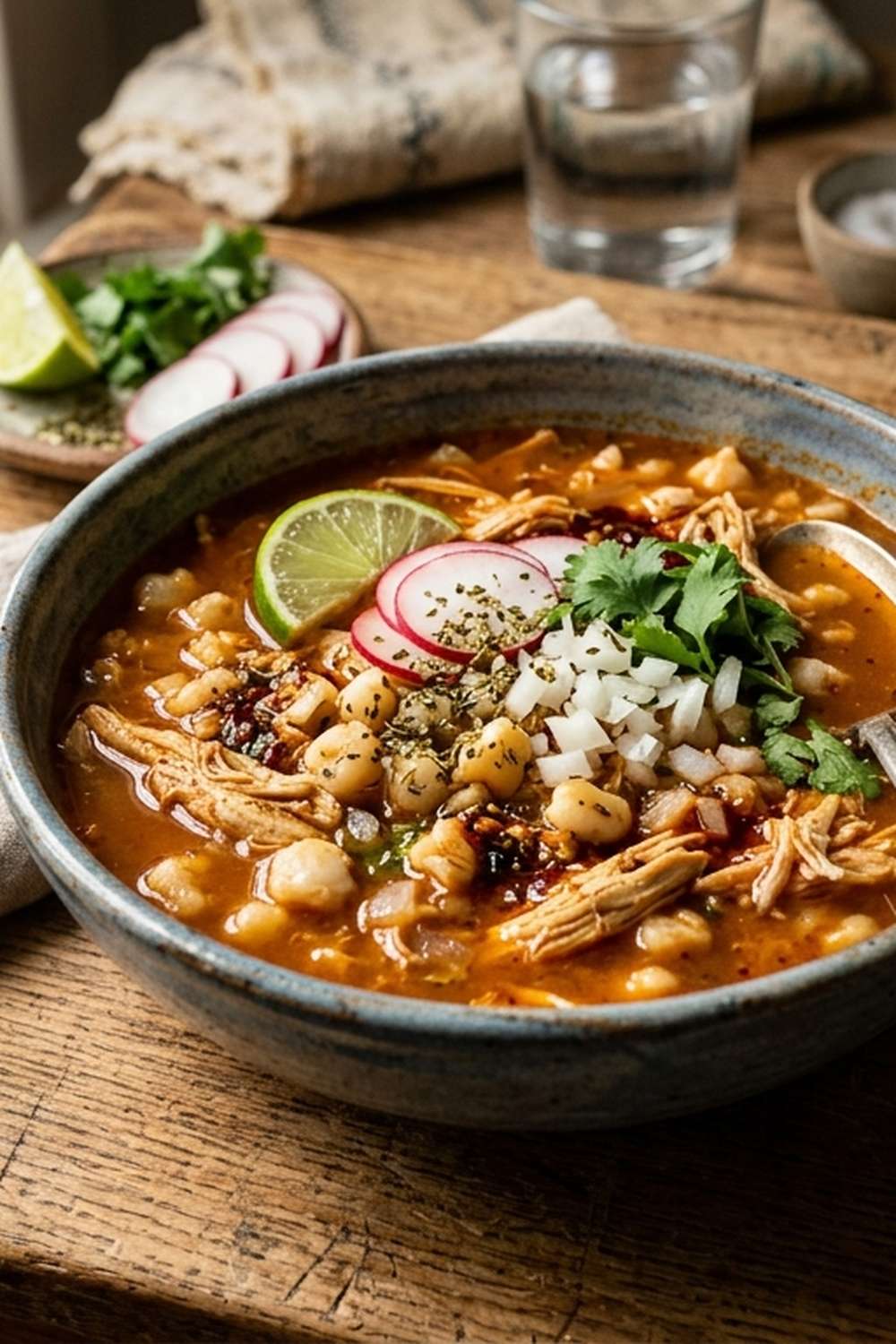
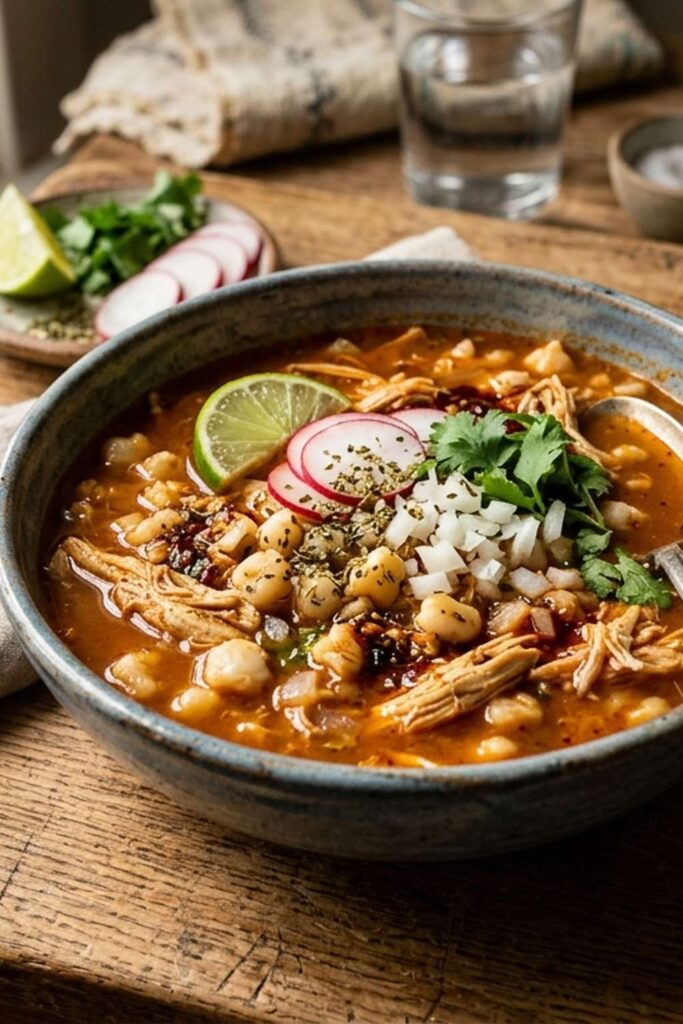
When I was growing up in Colorado, my family spent winters gathered around steaming bowls of this magnificent chicken hominy soup. This dish brings together Mexican culinary heritage and American comfort food traditions in a way that honors both cultures while creating something entirely new. It’s become my go-to recipe for holiday gatherings, friendsgivings, and those bone-chilling Denver nights when everyone needs nourishment and connection. I’ve served this soup to hundreds of guests over the past decade, and I can tell you with absolute certainty: this is the recipe that gets people talking, coming back for seconds, and asking for the ingredients list before they leave.
Chicken Hominy Soup: Where Mexican Tradition Meets American Comfort Food
My love affair with this soup began during a research trip through New Mexico about twelve years ago. I was studying traditional recipes for a nutrition continuing education course, and I stayed with a family in Santa Fe who introduced me to their version of this warming classic. What struck me wasn’t just the flavor—it was the way it brought everyone together. The mother of the house told me this soup had been in her family for generations, originally rooted in pre-Hispanic cooking techniques using nixtamalized corn (hominy). She taught me that the best versions honor the ingredient’s history while welcoming modern adaptations.
When I returned to Colorado, I began experimenting with making this soup more accessible for diverse dietary needs and budgets. I started incorporating techniques from American comfort food cooking—like browning the chicken for deeper flavor—while keeping the soul of the Mexican tradition intact. The result? A fusion that feels timeless and new at the same time.
The Two Traditions Behind This Dish
Understanding where this soup comes from helps us cook it with intention and respect. Mexican cuisine brings the star ingredient—hominy—plus the aromatic warmth of oregano and the depth of chili powder. American comfort food traditions contribute the technique of building a deeply flavored broth through proper browning and the approach of creating an accessible, one-pot meal that feeds a crowd affordably.
- Mexican culinary heritage – provides hominy (a sacred ingredient with thousands of years of history), oregano’s herbaceous warmth, and the philosophy that simple ingredients can create extraordinary flavor
- American comfort food tradition – brings the one-pot efficiency, the browning technique for complex flavor, and the emphasis on generous portions that feed families and communities
Why This Fusion Works
The genius of this combination lies in flavor chemistry and cultural logic. Hominy—corn kernels that have been treated with an alkaline substance—has a unique, slightly sweet, toothsome texture. When you simmer it in a deeply flavored broth built from browned chicken, you create a situation where the hominy absorbs all those flavors while maintaining its structural integrity. The oregano and chili powder provide the warm, slightly smoky backbone that makes this soup feel both sophisticated and approachable.
From a nutritional perspective, this fusion is brilliant. Hominy is naturally lower in phytic acid than regular corn, making its minerals more bioavailable to our bodies. When you combine it with lean protein from chicken and build the broth with quality ingredients, you’re creating a meal that satisfies both hunger and nutritional needs—exactly what both Mexican and American home cooks have always understood.
The Ingredients – A Tale of Two Traditions
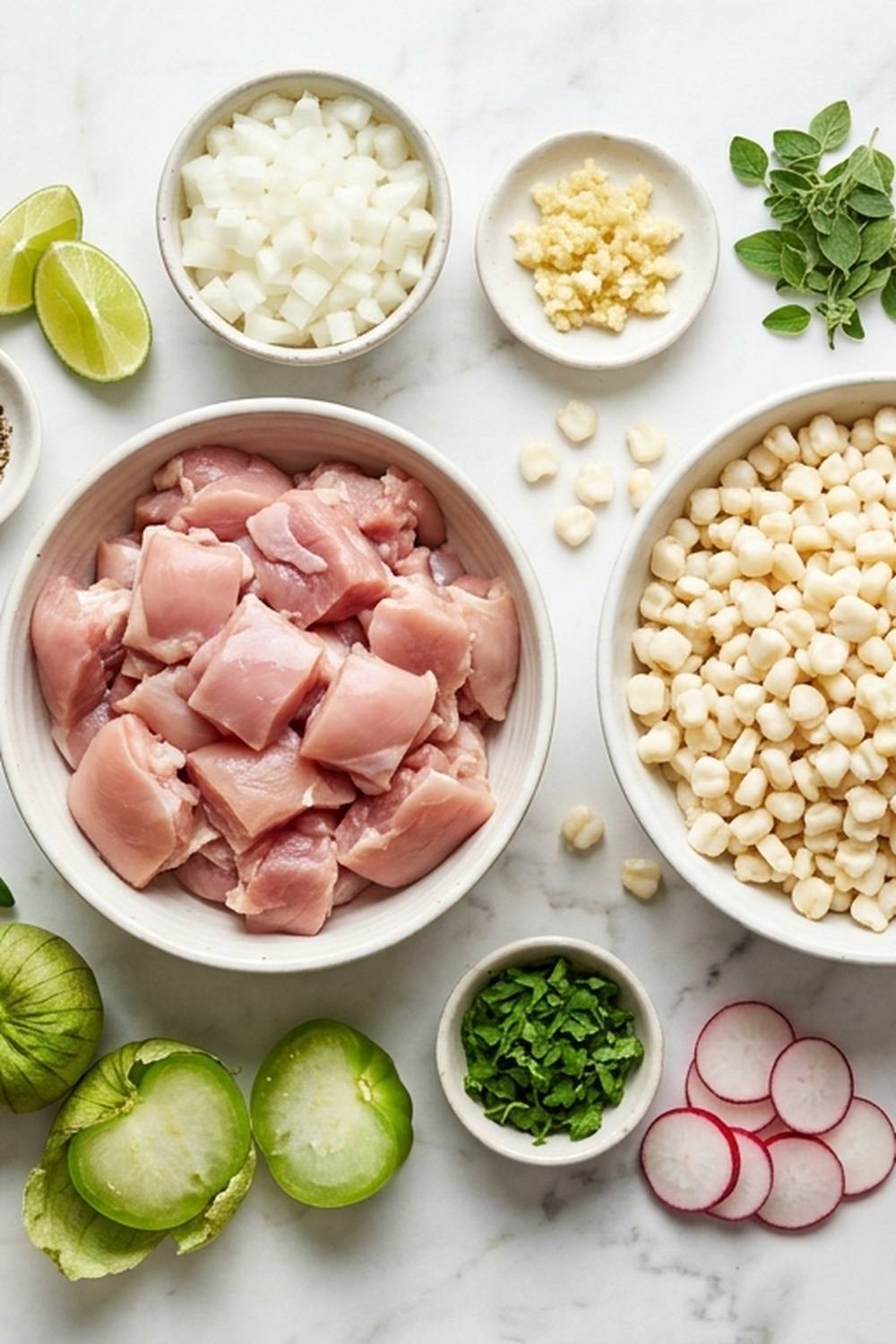
Each ingredient in this soup tells a story of cultural wisdom. Here’s what you’ll need to create this warming masterpiece, with notes on where each ingredient comes from and why it matters:
- 1 large yellow onion, chopped into ½-inch pieces (the classic aromatic base)
- 1 teaspoon cumin, ground (adds earthiness from the warming spice tradition)
- 2 tablespoons neutral cooking oil such as avocado or vegetable oil (for browning without smoke)
- 10 cups low-sodium chicken broth or homemade stock (the liquid foundation that carries all flavor)
- 3 cups canned white hominy, drained and rinsed well (the star ingredient, with ancient roots)
- 2 teaspoons sea salt, plus more for final adjustment (enhances all other flavors)
- 1 teaspoon dried oregano, preferably Mexican oregano (more robust and floral than Mediterranean types)
- 3 tablespoons ground red chili powder, such as New Mexico or ancho (the warm heart of the soup)
- Fresh cilantro, lime wedges, diced white onion, and crumbled cotija cheese (for finishing)
- 4 garlic cloves, minced fine (adds pungency and depth)
- 2½ pounds boneless, skinless chicken breasts or thighs, cut into 1-inch cubes (thighs stay more tender through long cooking)
Makes approximately 8 generous servings as a main course, or 12 servings as a first course.
How to Make This Fusion Chicken Hominy Soup
What I love about this recipe is how it respects the natural rhythm of both cooking traditions. You’re not rushing; you’re building flavors intentionally. From my decade of feeding large groups, I can tell you that the slow simmering time is what makes guests say “this tastes like home.”
Step 1: Brown the Chicken for Deep Flavor Foundation
Heat your cooking oil in a large pot (at least 5-quart capacity) over medium-high heat until it shimmers. This browning step is pure American technique—we’re creating the Maillard reaction, that magical process where proteins and sugars interact to create complex flavors. Add your cubed chicken in a single layer, working in batches if needed so you don’t crowd the pan. Let each piece sit undisturbed for 2-3 minutes per side until golden brown. This is where the depth happens—don’t skip it or rush it.
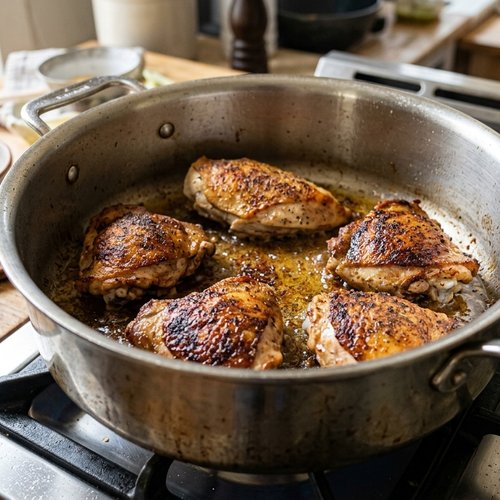
Use a slotted spoon to transfer the browned chicken to a clean plate. You’ll notice the bottom of the pot has beautiful brown bits—we call this fond, and it’s liquid gold for flavor. Set the chicken aside; we’ll return to it soon.
Step 2: Build Your Aromatic Base
With the pot still at medium heat, add your chopped onion to the same pot where you browned the chicken. The residual heat and fat will begin softening the onion immediately. Stir frequently for about 5 minutes, until the onion becomes translucent and begins to release its sweet juices. Add your minced garlic and cook together for another minute—just until fragrant. You want to stop right before the garlic begins browning, which would make it bitter.
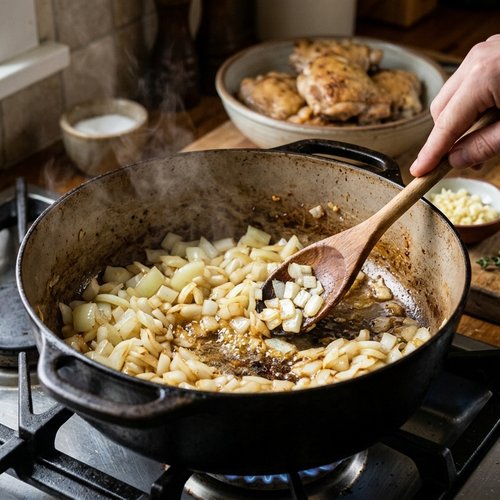
This is the fusion moment: This aromatic base belongs to both traditions. Mexican cooks have been building flavor this way for centuries; American comfort food cooks do exactly the same thing. You’re honoring both approaches simultaneously.
Step 3: Combine Everything and Begin the Long Simmer
Return the browned chicken to the pot. Pour in your chicken broth—use low-sodium broth because you’ll be adding salt and want to control the final seasoning. Add the oregano, sea salt, chili powder, and the cumin I’ve added to round out the flavor profile. Stir everything together until the spices are distributed throughout the liquid.

Increase the heat to bring the broth to a gentle boil, then reduce it to low. Cover the pot partially and let it simmer for 90 minutes. The chicken will become incredibly tender, and the broth will develop a rich, complex flavor. This patient cooking time is non-negotiable—it’s what transforms simple ingredients into something profound.
Step 4: Add the Star Ingredient
After 90 minutes, open your pot and take a moment to appreciate what’s happened. The aroma alone should transport you. Now add your drained and rinsed hominy. Rinse it well under cold running water—this removes any metallic taste and excess sodium that might have been in the canning liquid. Stir the hominy into the soup and increase the heat slightly to return it to a gentle simmer.
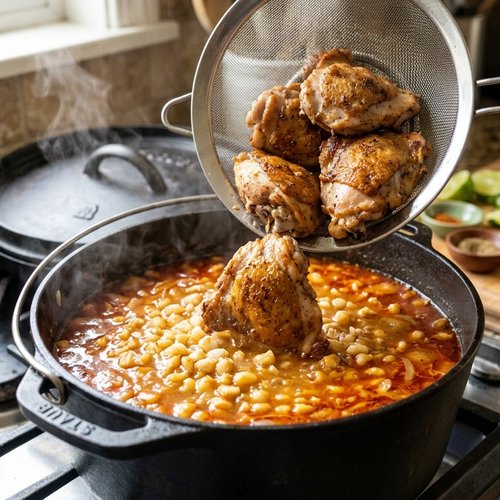
Cook for another 15 minutes, which allows the hominy to absorb the flavors you’ve been building and to heat through completely. This is the moment where the Mexican tradition’s star ingredient joins the American comfort food foundation—and the magic is complete.
Step 5: Taste and Adjust Your Seasonings
This step separates good home cooks from great ones. Remove the pot from heat and taste a spoonful of broth. Does it need more salt? More chili powder warmth? Trust your palate. I typically find that one additional teaspoon of salt brightens everything beautifully. If you want more chili heat, add ½ teaspoon at a time, stirring and tasting between additions.

Remember that the garnishes—especially the lime juice and fresh cilantro—will add bright acidity and freshness that ties everything together. Don’t oversalt thinking about the final garnishes; let them do their job.
Step 6: Serve with Intention and Joy
Ladle the soup into bowls, making sure each person gets a generous portion of chicken and hominy along with plenty of broth. This is where the magic of gathering happens. Set out small bowls of fresh cilantro, lime wedges, diced white onion, and crumbled cotija cheese. Let each person customize their bowl. In my experience hosting hundreds of gatherings, this interactive element makes people feel honored and included—they’re not just eating what you’ve made, they’re completing the dish themselves.
Warm flour tortillas on a cast-iron skillet or directly over a gas flame, wrap them in a clean kitchen towel to keep them soft, and serve alongside. The tortillas are not an afterthought—they’re how people will soak up the last drops of this precious broth.
Expert’s Nutritional Tip: Understanding Hominy’s Hidden Benefits
One of the reasons this soup has sustained cultures for centuries is that hominy is nutritionally superior to regular corn. When corn is treated with an alkaline substance (a process called nixtamalization), something remarkable happens: the niacin (vitamin B3) becomes bioavailable, meaning your body can actually absorb and use it. This process also reduces phytic acid, which means minerals like calcium, iron, and zinc are more accessible to your body.
As a registered dietitian, I see this as ancient nutritional wisdom that modern science validates. When you combine this nutrient-enhanced grain with lean chicken protein and a broth base, you’re creating a complete protein meal that also provides significant B vitamins. This is why this soup has been considered sustaining and health-promoting food across generations.
Make-Ahead Guide: Feast Planning for Busy Hosts
One of my favorite aspects of this recipe is how beautifully it works for advance preparation. Here’s my professional approach to serving this soup stress-free at any gathering:
- Up to 3 days ahead: Complete the entire recipe through Step 4 (before adding hominy). Cool the soup completely, then store it in an airtight container in the refrigerator. The flavors will actually deepen as it sits.
- The day of your gathering: Transfer the soup to your cooking pot and reheat gently over medium heat. When steam begins rising, add the hominy and proceed with Step 4. This approach means you’re only simmering for 15 minutes on gathering day rather than 105 minutes.
- Garnish prep: The morning of your gathering, prep all your garnishes: cilantro can be roughly chopped and stored in a damp paper towel in a sealed container; limes can be cut into wedges and wrapped; cheese can be crumbled and placed in a small bowl with plastic wrap.
- Tortilla timing: Warm tortillas just before serving. If you’re heating them 5-10 minutes before guests arrive, they’ll stay warm wrapped in a towel.
- Freezing option: You can freeze the soup (without hominy) for up to 3 months. Thaw overnight in the refrigerator, then reheat and add hominy as described above. I don’t recommend freezing after adding hominy, as the texture becomes mushy.
Common Mistakes to Avoid
In my years of teaching community cooking classes, I’ve noticed four mistakes that prevent people from achieving this soup’s full potential:
- Skipping the browning step: I understand the temptation to skip browning and just dump everything in, but this step is non-negotiable. Those brown bits create the flavor foundation that makes people ask for your recipe. It takes only 10 minutes and changes everything.
- Using high-sodium broth without adjusting salt: If you use regular salted chicken broth and add the full 2 teaspoons of salt, you’ll end up with an overly salty soup. Use low-sodium broth, or reduce the added salt if using regular broth. Taste and adjust—this is your control.
- Not rinsing the hominy: Canned hominy sits in liquid that can taste metallic or overly salty. Rinse it thoroughly under cold running water. This simple step makes a noticeable difference in the final taste.
- Adding hominy too early: Hominy breaks down if simmered for hours. Add it in the final 15 minutes only. If you’re making this ahead, this is the step you save for serving day.
How to Customize the Fusion Ratio
Part of what makes fusion cooking exciting is the ability to lean toward whichever tradition resonates with your palate. Here’s how to adjust this recipe:
- Lean more Mexican: Increase chili powder to 4 tablespoons, add 1 teaspoon of ground cumin (I’ve already included ½ teaspoon but you can increase it), and serve with warm corn tortillas and a side of Avocado Tomatillo Salsa Recipe. You might also add a jalapeño pepper (seeded for less heat) simmered with the broth for additional authenticity.
- Lean more American comfort food: Add 2 carrots and 2 celery stalks (diced) when you sauté the onion and garlic. These classic American soup aromatics add vegetables and sweetness. Serve with cornbread or biscuits instead of tortillas. Use chicken thighs exclusively (more forgiving and tender than breasts) for a richer, more indulgent feel.
Seasonal Variations: Adapting Throughout the Year
This soup is magnificent year-round, but I love adjusting it seasonally to highlight what’s fresh and available:
- Winter (current season): This is the recipe as written—it’s pure comfort. Add extra warming spices like a pinch of cinnamon if you’re leaning into holiday flavors.
- Spring: Add fresh spinach or kale (about 2 cups) in the final 5 minutes of cooking for brightness and nutrients. Include fresh cilantro generously in the garnish.
- Summer: Reduce the hominy slightly (to 2 cups) and add diced zucchini and fresh corn kernels in the final 10 minutes. Serve chilled or at room temperature. Include fresh lime juice prominently in the final garnish.
- Fall: Add 1 diced poblano pepper (roasted and peeled) and ½ teaspoon of smoked paprika for subtle smokiness. Include toasted pumpkin seeds (pepitas) as a garnish for crunch and seasonal richness.
Other Great Mexican and American Comfort Food Combinations
Once you understand how beautifully these two traditions work together, you’ll start seeing fusion opportunities everywhere. If you loved this chicken hominy soup, consider exploring these other wonderful combinations:
- Arroz Con Pollo Best Recipe – a classic fusion of Spanish-Mexican technique with American comfort food sensibilities
- Asparagus Corn Recipe – demonstrating how Mexican corn traditions meet American vegetable side dishes
- Chorizo and corn chowder – combining Mexican sausage traditions with American cream-based soups
- Black bean soup with bacon – merging Mexican legume heritage with American flavor-building techniques
Can I Store Chicken Hominy Soup?
Absolutely, and this is one of the reasons I love making large batches. Proper storage ensures you can enjoy this soup multiple ways throughout the week:
Refrigerator storage: Keep the soup in an airtight container for up to 4 days. Store the hominy separately if you’ve made it ahead without hominy (as I recommend)—this prevents the hominy from becoming mushy from extended refrigeration. When ready to eat, reheat gently over medium heat, add the hominy in the final 5 minutes, and proceed with garnishing.
Freezer storage: The soup (prepared without hominy) freezes beautifully for up to 3 months. Use freezer-safe containers or heavy-duty freezer bags. Thaw overnight in the refrigerator, then reheat and add hominy. Do not freeze the soup after adding hominy, as the texture deteriorates.
Reheating from frozen: You can reheat directly from frozen if needed by thawing in a pot on the stovetop over low heat (about 45 minutes, stirring occasionally). Once thawed and heated through, add hominy and simmer for 15 minutes.
Nutrition Information
Based on USDA nutritional database standards, each serving (approximately 1.5 cups including broth, chicken, and hominy, but before garnishes) contains approximately 285 calories, 18 grams of protein, 22 grams of carbohydrates, and 8 grams of fat. This represents a well-balanced, nutrient-dense meal that’s appropriate for most dietary approaches.
The protein comes from the chicken and is complemented by complex carbohydrates from the hominy, making this a complete meal that provides sustained energy. The broth-based preparation keeps the fat content moderate while preserving flavor. This soup provides meaningful amounts of B vitamins (especially niacin from the nixtamalized corn), selenium, and phosphorus.
From a traditional nutrition perspective, both Mexican and American health wisdom recognized this as sustaining food. Mexican cultures understood that hominy, when prepared correctly, provided complete nutrition for families. American comfort food tradition recognized that slow-simmered broths contained collagen and minerals that supported joint and gut health. Modern nutrition science validates both traditions.
What to Serve With Chicken Hominy Soup?
The right sides elevate this soup from simple to spectacular. Here’s what I serve alongside it:
- Warm flour or corn tortillas – the essential companion that lets people soak up every drop of broth
- Crusty bread or cornbread – especially wonderful if you’re leaning toward the American comfort food tradition
- Avocado Tomatillo Salsa Recipe – adds bright, fresh acidity that cuts through the soup’s richness beautifully
- Mexican street corn salad (elote salad) – a fresh, crunchy vegetable side that provides textural contrast
- Simple green salad with lime vinaigrette – fresh greens with acidic dressing balance the soup’s warmth perfectly
- Roasted vegetables like Asparagus Corn Recipe – adds nutritional depth and color contrast to the meal
- Refried beans – a protein-rich side from the Mexican tradition that pairs naturally
Healthy Ingredient Swaps for Dietary Needs
One of my core philosophies as a dietitian is that delicious, traditional food should be accessible to everyone, regardless of dietary needs. Here are intelligent swaps that preserve the soul of this soup:
- For reduced sodium: Use homemade chicken broth (or store-bought unsalted broth) and reduce added salt to 1 teaspoon, adjusting upward only as needed. The hominy and other ingredients will provide natural sodium. You’ll lose nothing in flavor.
- For added vegetables: Introduce diced carrots, celery, and zucchini when you sauté the onion. Add leafy greens (spinach, kale) in the final 5 minutes. This increases nutrient density without overwhelming the traditional flavor profile.
- For higher protein: Use chicken thighs exclusively instead of breasts—they’re slightly higher in protein and much more forgiving. You could also add 1 pound of ground turkey browned before the chicken for extra protein.
- For budget-conscious cooking: Use chicken thighs (usually less expensive than breasts) and make your own broth from chicken bones and vegetable scraps. These swaps actually improve flavor while reducing cost.
- For gluten-free: This soup is naturally gluten-free. Simply ensure your broth and chili powder have no added gluten. Serve with corn tortillas instead of flour.
- For dairy-free: Skip the cotija cheese garnish or use a dairy-free cheese alternative. The soup itself is naturally dairy-free, so you’re losing only one optional garnish.

Chicken Hominy Recipe
Ingredients
Method
- Heat your cooking oil in a large pot (at least 5-quart capacity) over medium-high heat until it shimmers. This browning step is pure American technique—we're creating the Maillard reaction, that magical process where proteins and sugars interact to create complex flavors. Add your cubed chicken in a single layer, working in batches if needed so you don't crowd the pan. Let each piece sit undisturbed for 2-3 minutes per side until golden brown. This is where the depth happens—don't skip it or rush it. Use a slotted spoon to transfer the browned chicken to a clean plate. You'll notice the bottom of the pot has beautiful brown bits—we call this fond, and it's liquid gold for flavor. Set the chicken aside; we'll return to it soon.

- With the pot still at medium heat, add your chopped onion to the same pot where you browned the chicken. The residual heat and fat will begin softening the onion immediately. Stir frequently for about 5 minutes, until the onion becomes translucent and begins to release its sweet juices. Add your minced garlic and cook together for another minute—just until fragrant. You want to stop right before the garlic begins browning, which would make it bitter. This is the fusion moment: This aromatic base belongs to both traditions. Mexican cooks have been building flavor this way for centuries; American comfort food cooks do exactly the same thing. You're honoring both approaches simultaneously.

- Return the browned chicken to the pot. Pour in your chicken broth—use low-sodium broth because you'll be adding salt and want to control the final seasoning. Add the oregano, sea salt, chili powder, and the cumin I've added to round out the flavor profile. Stir everything together until the spices are distributed throughout the liquid. Increase the heat to bring the broth to a gentle boil, then reduce it to low. Cover the pot partially and let it simmer for 90 minutes. The chicken will become incredibly tender, and the broth will develop a rich, complex flavor. This patient cooking time is non-negotiable—it's what transforms simple ingredients into something profound.

- After 90 minutes, open your pot and take a moment to appreciate what's happened. The aroma alone should transport you. Now add your drained and rinsed hominy. Rinse it well under cold running water—this removes any metallic taste and excess sodium that might have been in the canning liquid. Stir the hominy into the soup and increase the heat slightly to return it to a gentle simmer. Cook for another 15 minutes, which allows the hominy to absorb the flavors you've been building and to heat through completely. This is the moment where the Mexican tradition's star ingredient joins the American comfort food foundation—and the magic is complete.

- This step separates good home cooks from great ones. Remove the pot from heat and taste a spoonful of broth. Does it need more salt? More chili powder warmth? Trust your palate. I typically find that one additional teaspoon of salt brightens everything beautifully. If you want more chili heat, add ½ teaspoon at a time, stirring and tasting between additions. Remember that the garnishes—especially the lime juice and fresh cilantro—will add bright acidity and freshness that ties everything together. Don't oversalt thinking about the final garnishes; let them do their job.

- Ladle the soup into bowls, making sure each person gets a generous portion of chicken and hominy along with plenty of broth. This is where the magic of gathering happens. Set out small bowls of fresh cilantro, lime wedges, diced white onion, and crumbled cotija cheese. Let each person customize their bowl. In my experience hosting hundreds of gatherings, this interactive element makes people feel honored and included—they're not just eating what you've made, they're completing the dish themselves. Warm flour tortillas on a cast-iron skillet or directly over a gas flame, wrap them in a clean kitchen towel to keep them soft, and serve alongside. The tortillas are not an afterthought—they're how people will soak up the last drops of this precious broth.
Notes
FAQs
Can I use boneless, skinless chicken breasts instead of thighs?
Yes, absolutely. Breasts will work, though they’re less forgiving—they dry out more easily with long cooking. If using breasts exclusively, monitor them carefully during the 90-minute simmer. Thighs stay moist and tender through extended cooking, which is why I prefer them, but breasts are leaner if that’s your preference. For the best of both worlds, use a combination: thighs for flavor and moisture, breasts for those who prefer leaner meat.
Where do I find hominy, and can I substitute corn?
Hominy is available in the Mexican foods section of most grocery stores, either canned or dried. Don’t substitute regular corn—hominy is essential to the flavor and texture of this dish. Dried hominy requires pre-soaking and cooking, so canned is most convenient for weeknight cooking. The nixtamalization process that creates hominy is irreplaceable; regular corn lacks that unique slightly sweet, tender quality.
My chili powder tastes too hot. What should I do?
Ground chili powder from dried chiles varies significantly in heat level depending on the type and source. If you’re concerned, start with 2 tablespoons instead of 3, taste the soup after 90 minutes, and add more if desired. You can also balance heat by adding more salt or a pinch of sugar (about ½ teaspoon) to mellow the chile flavor. Mexican oregano also helps round out harsh heat notes.
Can I make this in a slow cooker or Instant Pot?
Slow cooker: Brown the chicken in a skillet first (don’t skip this!), then add all ingredients except hominy to the slow cooker. Cook on low for 6-7 hours or high for 3-4 hours. Add hominy in the final 20 minutes. Instant Pot: Brown chicken using the sauté function, remove it, sauté the onion and garlic, return the chicken, add remaining ingredients except hominy. Pressure cook on high for 25 minutes, quick release, then add hominy and sauté for 5 minutes. Both methods work, but stovetop cooking gives you the most control and better browning flavor.
What if I want to make this vegetarian?
Replace the chicken with 1 pound of extra-firm tofu (pressed and cubed) or with hearty beans like pinto or black beans (about 3 cups cooked). Use vegetable broth instead of chicken broth. Brown the tofu pieces in oil until golden on multiple sides for deep flavor. Add an extra teaspoon of cumin to replace some of the savory depth that meat provides. The soup will be different but delicious—and equally satisfying and protein-rich.
More Fusion Recipes You’ll Love
- Arroz Con Pollo Best Recipe – another beautiful fusion of Mexican tradition and American comfort food sensibilities
- Avocado Tomatillo Salsa Recipe – the perfect bright complement to serve alongside this soup
- Asparagus Corn Recipe – celebrating corn in another delicious fusion preparation
- this simple cake – for when you want to continue your gathering with dessert that bridges cultures
Closing Thoughts: Food as a Bridge Between Cultures
This chicken hominy soup represents everything I believe about food: that it’s not just nourishment, it’s connection. When you make this soup, you’re honoring Mexican culinary wisdom that dates back centuries. You’re also embracing American traditions of gathering around warm, simple food. Most importantly, you’re creating something entirely your own—a meal that carries the stories of both cultures and the love you put into preparing it.
Over my decade as a registered dietitian and gathering expert, I’ve learned that the recipes that matter most are the ones we return to again and again. They taste like home because they carry memory, intention, and care. This is that recipe for so many families I’ve had the honor to cook for.
I can’t wait to share many more delicious and festive recipes with you!
META DESCRIPTION: Learn how to make authentic Chicken Hominy Soup with expert tips from Iris Miller. Complete recipe, make-ahead guide, and cultural fusion story for holiday gatherings. chicken-hominy-soup-recipe