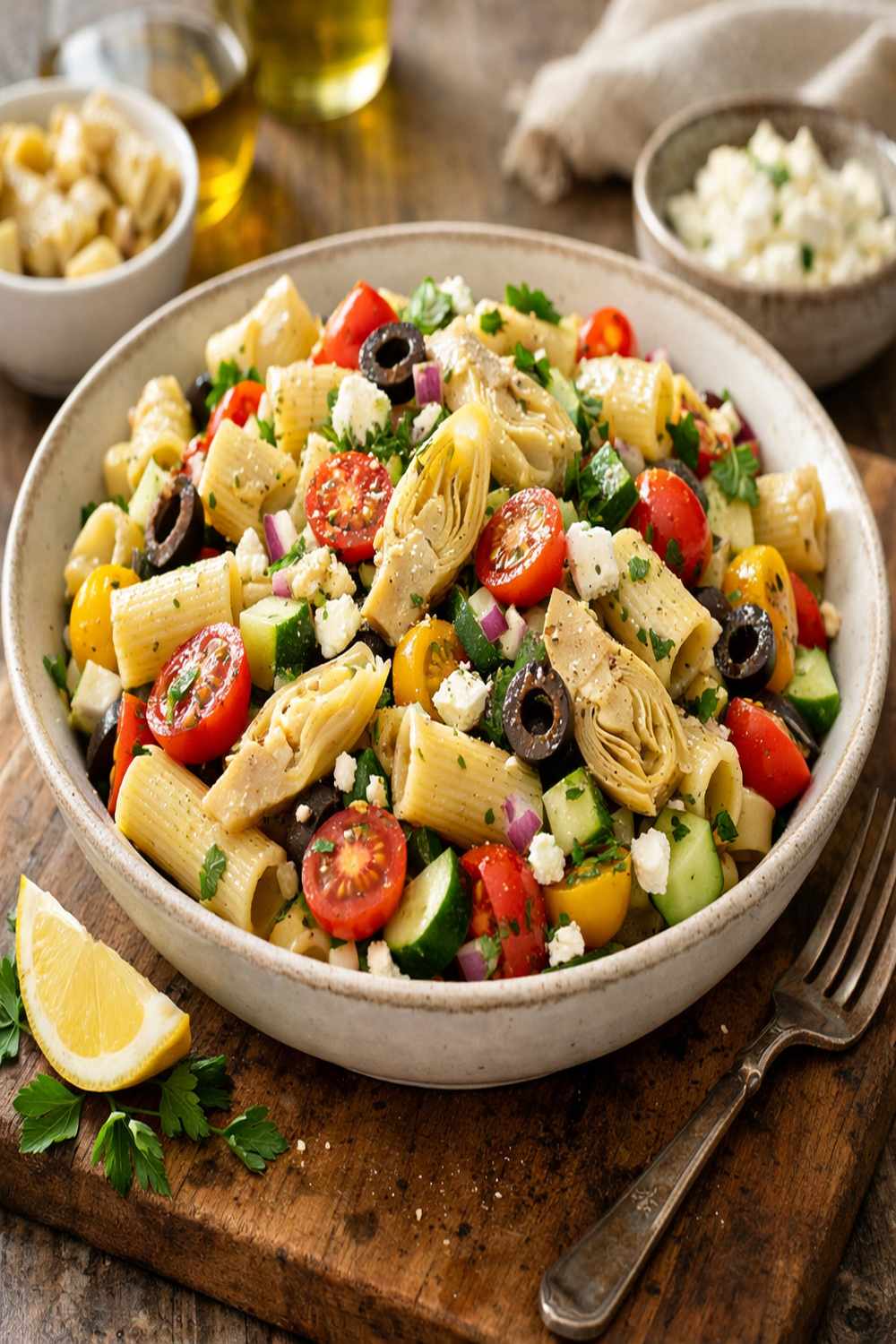

Ingredients
Method
Step 1: Cook Your Pasta to Perfect Doneness (Not Beyond)
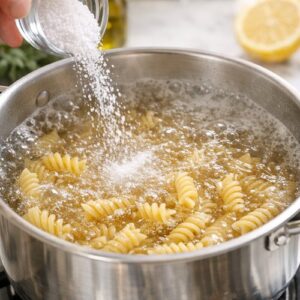
- Bring a large pot of salted water to a rolling boil. The salt is important—it seasons the pasta itself rather than relying on dressing for all flavor. Add your spiral pasta and cook according to package directions, but here's my professional advice: remove it one full minute before the package says it's done. You're aiming for al dente, which means there's still the tiniest bit of resistance when you bite into a strand. This matters tremendously because the pasta will continue to soften slightly as it cools and then sits with the dressing.
Step 2: Shock Your Pasta in Ice Water
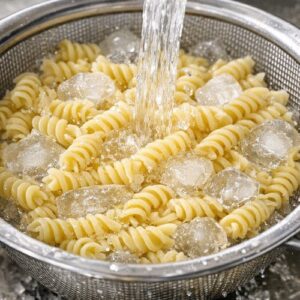
- This is the step that separates good from exceptional. Drain your cooked pasta into a colander immediately, then rinse it under cold running water while stirring gently with your fingers. Do not skip this step thinking warm pasta will cool on its own. Warm pasta continues cooking from residual heat, and the starch particles are actively trying to bind together into a gluey mess. Once the water running through is completely cold, toss the pasta with a handful of ice cubes and let it sit for 3-4 minutes, stirring occasionally. This halts all cooking instantly.
Step 3: Prepare Your Vegetables and Proteins
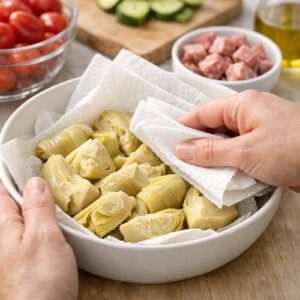
- While your pasta is cooling, this is the perfect time to prep everything else. Drain your canned artichoke hearts completely and pat them dry with paper towels—this step prevents your salad from becoming watery. Cut any particularly large pieces into more uniform quarters so they're not overwhelming in any single bite. Halve your cherry tomatoes lengthwise (this looks more elegant than random chops and helps them stay intact rather than bursting into mush). Pit your black olives if they're not already pitted, and halve them. Dice your deli ham into ¼-inch pieces and chop your pepperoni into similar-sized pieces. Everything should be roughly the same size so the salad feels balanced and intentional.
Step 4: Combine Your Cooled Pasta With Heartier Ingredients First
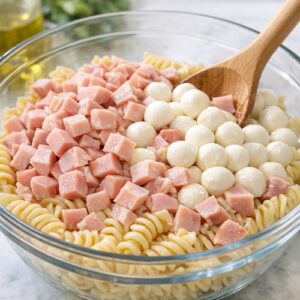
- Transfer your completely cooled pasta to a large mixing bowl. Add the mozzarella pearls and the deli ham pieces. Toss gently to distribute evenly. By adding the heartier, sturdier ingredients first, you're creating a foundation that can support the more delicate elements without crushing them. This is a technique I use constantly when creating multi-component salads—always build from sturdy to delicate.
Step 5: Add Artichokes, Olives, and Tomatoes With Intentionality
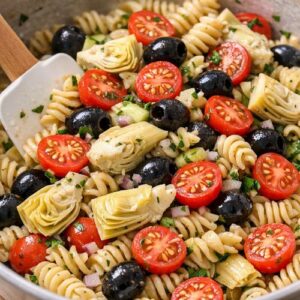
- Now add the artichoke hearts, black olives, and halved cherry tomatoes. Toss everything together very gently—I use a rubber spatula rather than tongs or my hands because it's kinder to the vegetables. You're looking for even distribution without manhandling anything into submission. This should take about 20 seconds of gentle folding, not vigorous mixing.
Step 6: Dress Your Salad (Not Drown It)
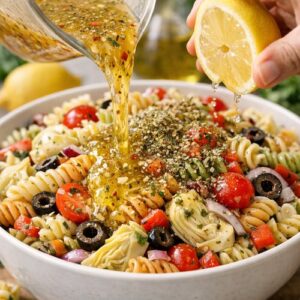
- Pour your 2 cups of Italian dressing evenly over the salad, then add the fresh lemon juice and dried oregano. Here's where most home cooks make their biggest mistake: they think "more dressing equals more flavor," when actually the opposite is true. Start with 1½ cups of dressing. Toss gently but thoroughly, using that rubber spatula to fold everything together until the dressing is evenly distributed. Taste a bite. Does it taste balanced, or does the dressing overpower the other flavors? If you need more richness, add the remaining ½ cup and toss again. This conservative approach prevents you from creating a dressing-logged disaster that can't be fixed.
Step 7: Chill Before Serving
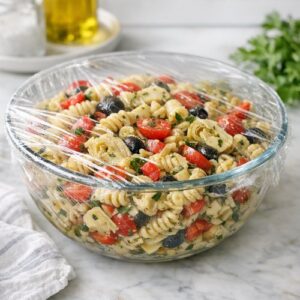
- Cover your bowl tightly with plastic wrap or transfer to a covered container and refrigerate for at least 2 hours, though overnight is genuinely better. This resting period allows the flavors to meld together beautifully. The pasta continues to absorb subtle flavors from the dressing, the artichokes soften slightly, and everything becomes more cohesive. I usually prepare this salad the morning of my event, which means I can check it off my list early and focus on other components without stress.
Notes
- Using warm pasta straight from the pot. Warm pasta actively absorbs dressing like a sponge and becomes gluey within hours. The starch is still swollen and reactive. Always cool your pasta completely in ice water before combining with other ingredients. I've seen this single mistake transform a beautiful salad into something nobody wants to eat by the time the main course is finished.
- Over-dressing the salad. "More is better" is the instinct that ruins most homemade pasta salads. You don't need to submerge every noodle in dressing. Start conservative—you can always add more, but you can't remove it. I recommend starting with 1½ cups of dressing for this recipe and adding more only if needed after tasting. A well-dressed salad should taste flavorful but not slick or heavy.
- Skipping the pat-dry step with your vegetables. Excess moisture from canned artichokes and jarred olives absolutely will dilute your dressing and create pooling liquid within hours. Use paper towels to gently blot each drained ingredient. This takes maybe 90 seconds and is the difference between a salad that looks fresh on day two versus one that looks abandoned.
- Mixing everything with your hands or aggressive tossing utensils. Your cherry tomatoes will burst, your artichoke hearts will break apart, and your mozzarella pearls will become smashed. Use a rubber spatula or salad spoon and fold gently. Everything should feel intentional and tender, not chaotic.